Closed loop versus adjustable, and why it is an operating choice
A closed loop is a continuous ring of silicone. It is put on over the hand at issue and removed by cutting it, which is exactly what a property wants for a child credential that should not be swapped between guests or dropped in a pool. The cost of that security is a sizing decision: the loop has to be right at issue, so the desk holds three circumferences rather than one band that fits everyone.
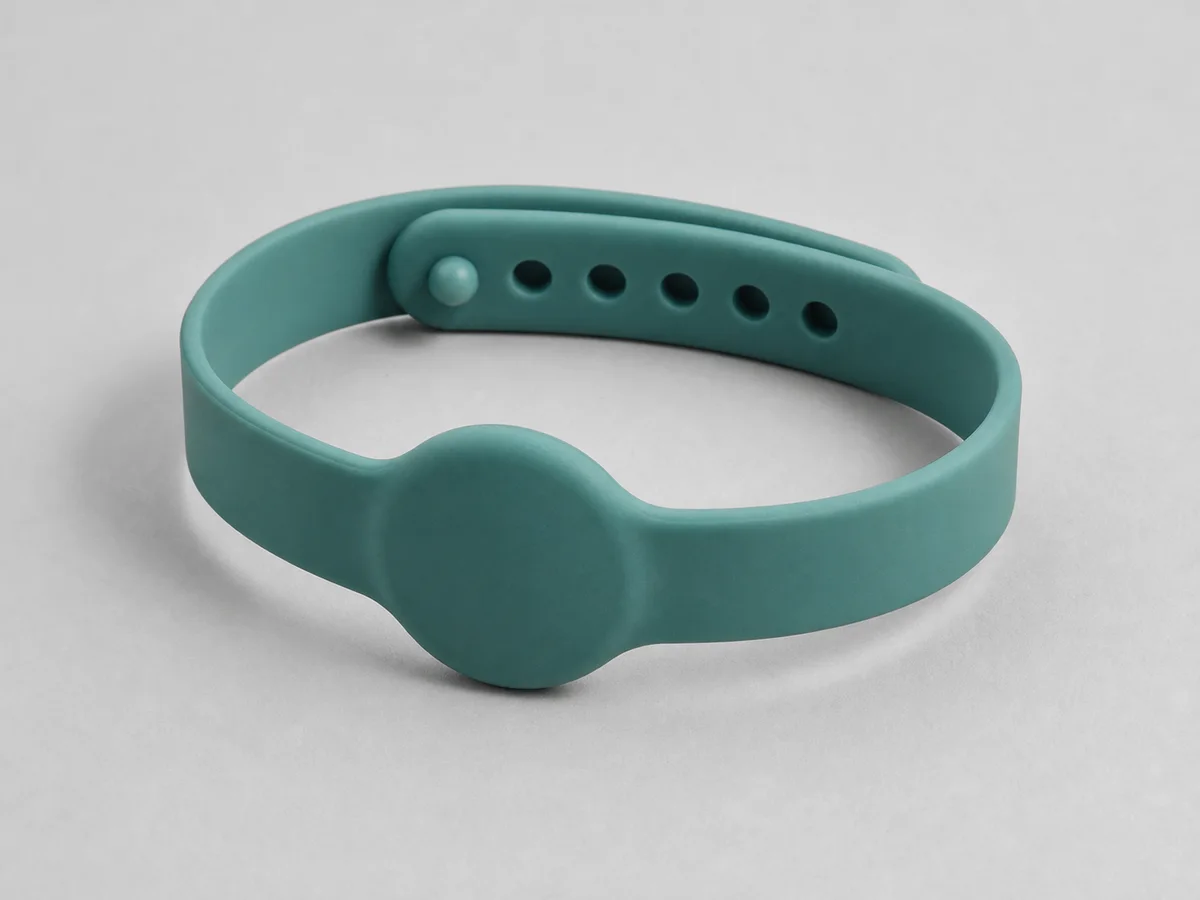
The adjustable version uses the same face and the same artwork, so a property can issue closed loops to children and adjustable bands to adults from one visually consistent range. That consistency is worth more than it sounds when staff are identifying guest types across a busy pool deck.
Why a round face suits high-volume family use
A round face has no correct orientation. A band that has rotated on a child’s wrist still presents a legible mark and a centred antenna, where an elongated face turned sideways reads as a mistake and can move the antenna off the top of the wrist. Over a day of swimming, climbing and towel-drying, that tolerance is the difference between a credential that looks maintained and one that looks untidy.
The round cavity is also the most stable to mould consistently. Colour and surface finish vary less across a long run than on more complex geometries, which matters when colour is carrying meaning — a wristband that is meant to be “yellow means day guest” has to still be that yellow in the fourth box.
Water, sun and the things children do to wristbands
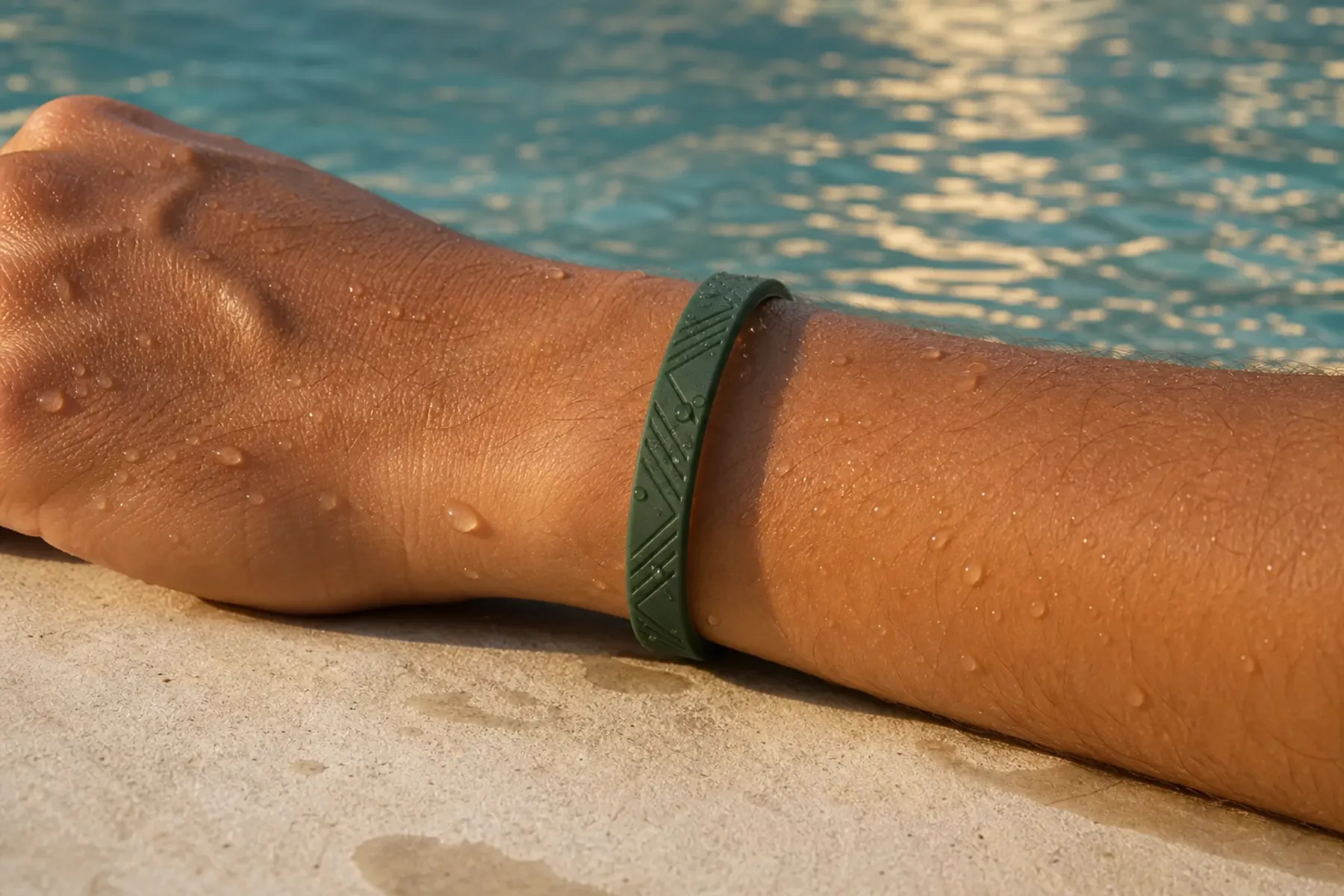
The material tolerates pool water, salt water and repeated wetting and drying. The realistic damage is mechanical: children pull at the face, catch the band on slide edges and chew the strap. A closed loop has no closure to fail, so the loop section itself becomes the wear point, and a slightly thicker strap section is worth specifying where the property runs waterslides or a climbing feature.
Sun exposure affects pigment before it affects the strap. Bright yellows and oranges — often the colours chosen for children precisely because they are visible — are the first to shift. Where the colour carries an access meaning, we sample the shift rather than approving on a fresh sample alone.
Issue, sizing and the checkout problem
Closed loops move the workload to the moment of issue. Staff choose a size, and a wrong choice costs a band. The practical answer is a sizing gauge at the desk and a small deliberate over-supply of the middle size rather than an even split, because that is where most guests land.
Removal at checkout needs a plan as well. Cutting a loop off is quick but requires a tool at the desk, and the cut bands are then a waste stream the property has chosen. Some properties let guests keep the band and remove it at home; that changes the credential from something recovered to something issued once, which is a stock and a security decision rather than a comfort one.
Artwork and colour as an access language
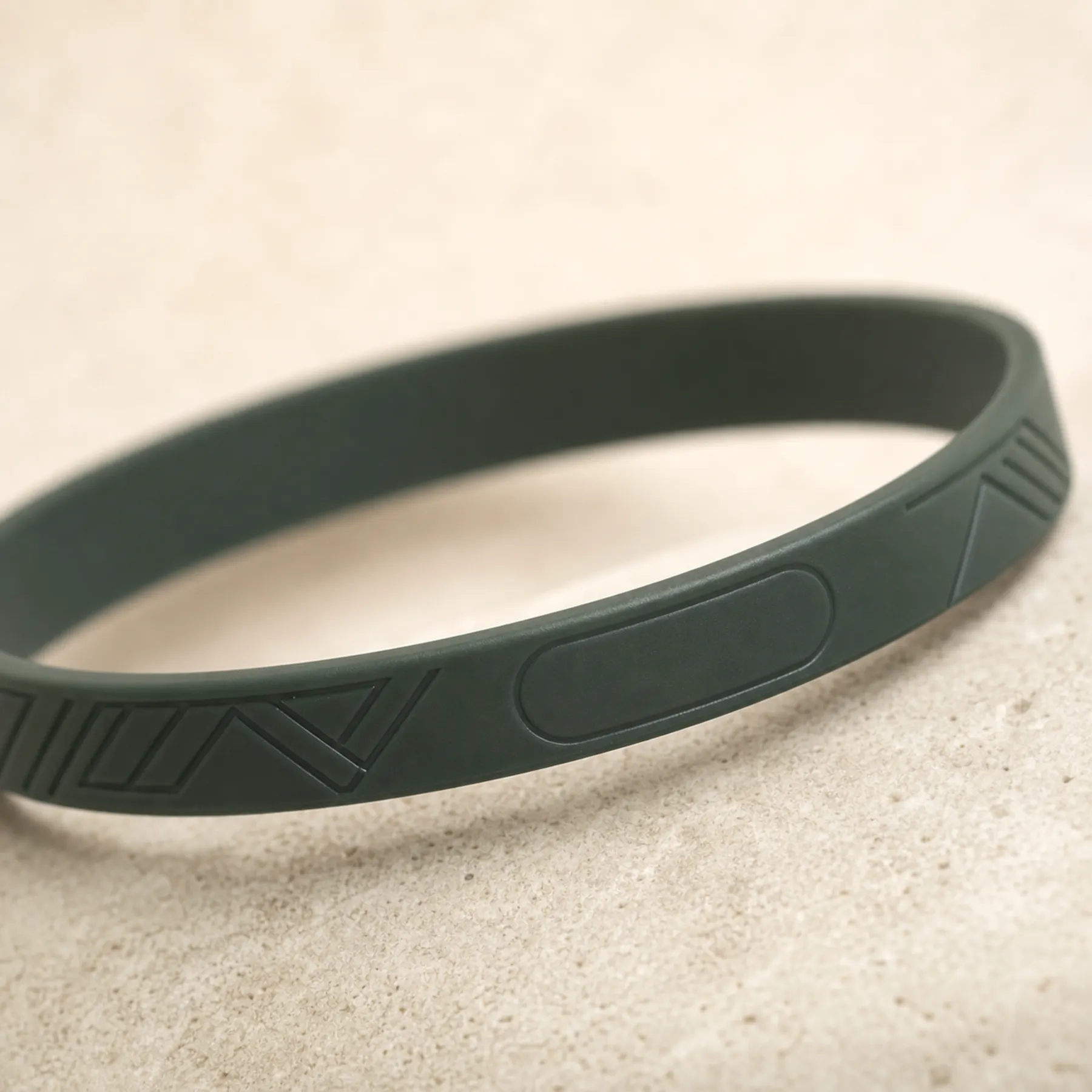
The usable artwork area on a round face is smaller than the outline suggests, because the curve steals the outer ring. A property mark plus a single character — a zone letter, a tier initial — is the honest limit for legibility at arm’s length. Anything more detailed belongs on the strap as a repeated deboss rather than crowded onto the face.
Where the range is doing colour-coded access, we recommend fixing the palette at the first order and reordering against colour references rather than against a colour name. “Resort blue” drifts between runs; a recorded reference does not.
Youth, junior and adult loops made from one artwork are one artwork for order purposes, but each size is a separate moulded part. Plan the split across sizes before the order rather than after, because the split cannot be changed once the run is scheduled.
When this is the wrong model
It is the wrong choice for an adult-led property that wants the credential to look like an accessory. The round face reads as a leisure band, and no colour choice changes that; a slim or watch-strap construction, or a fabric one, carries an adult programme better.
It is also wrong where the property needs to move one band between guests during a stay. A closed loop cannot be transferred without cutting, which is the point, but properties that reissue bands between day visitors should specify an adjustable or one-way closure model instead.