The problem this model solves
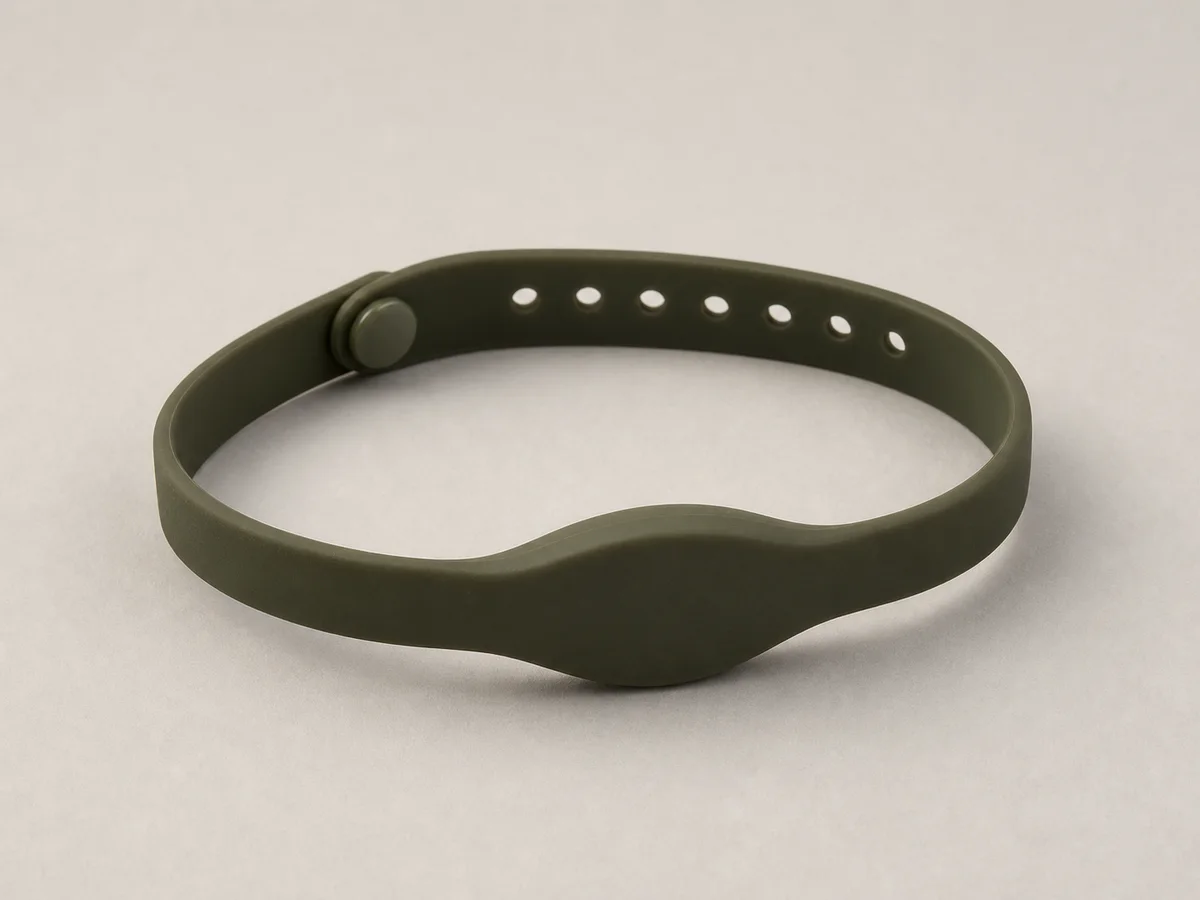
A slim band is comfortable but has nowhere to put a mark. A wide band has a mark but looks like event stock. Widening only the face resolves that: the strap stays narrow where it wraps the wrist, and the extra material appears only where the module and the artwork need it.
The result is the model we specify most often for spa and wellness programmes, where the band has to look considered but also has to be identifiable by staff at a treatment-room door.
Where the widening happens
The transition from strap to face is a stress concentration if it is abrupt. We run it as a gradual flare rather than a step, so the flex loads spread rather than gathering at a shoulder. That is a moulding decision that costs nothing and removes the most likely failure point on this geometry.
The face sits low against the wrist. Height, not width, is what catches on sleeves and towels, so a broad low face is more wearable than a narrow tall one even though it looks larger on a drawing.
Artwork that stays legible on a curve
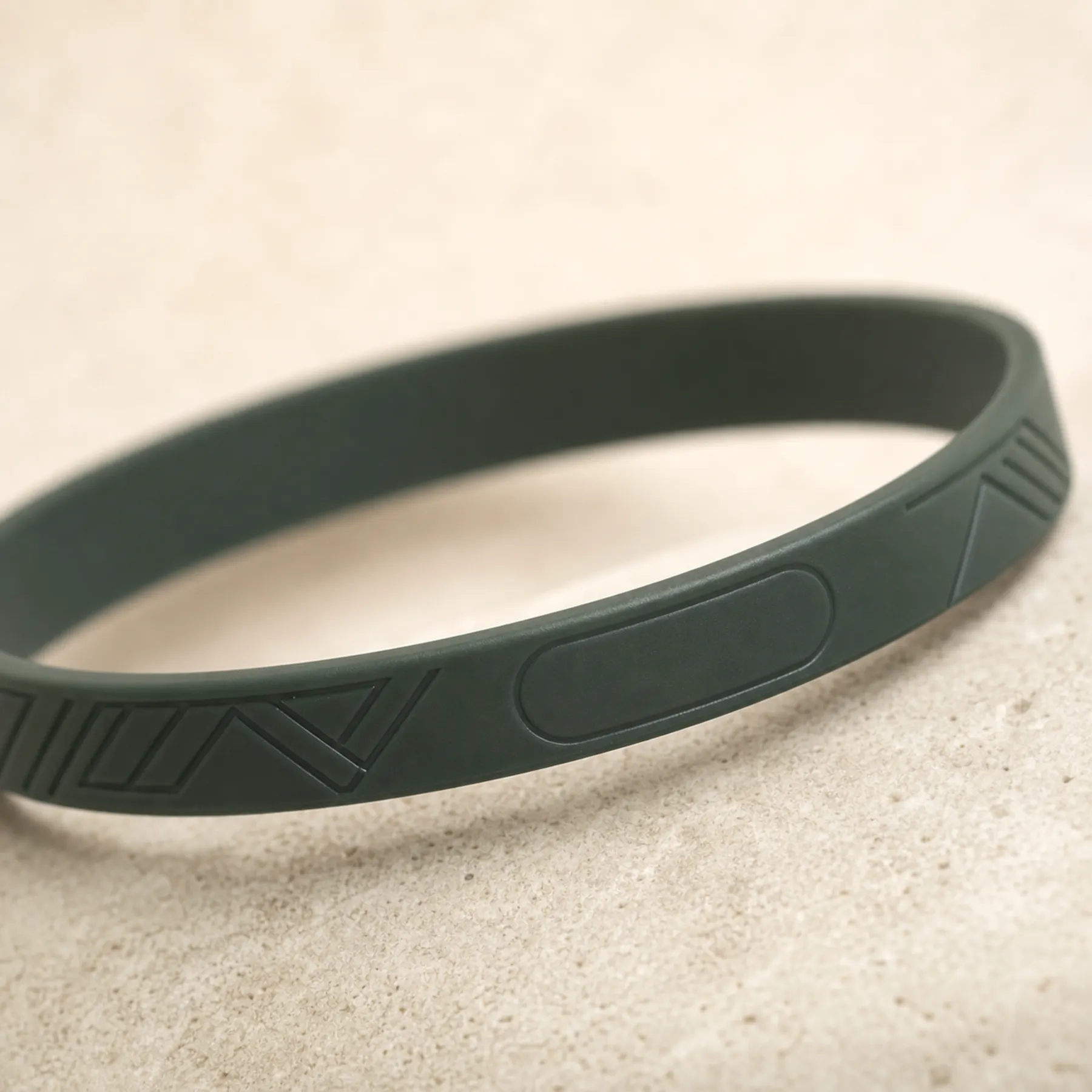
The oblate panel takes a property mark at a size that reads across a room, which is the practical test for staff identification. It does not take a mark plus a strapline plus a zone code; forcing all three produces something that reads as clutter at any distance.
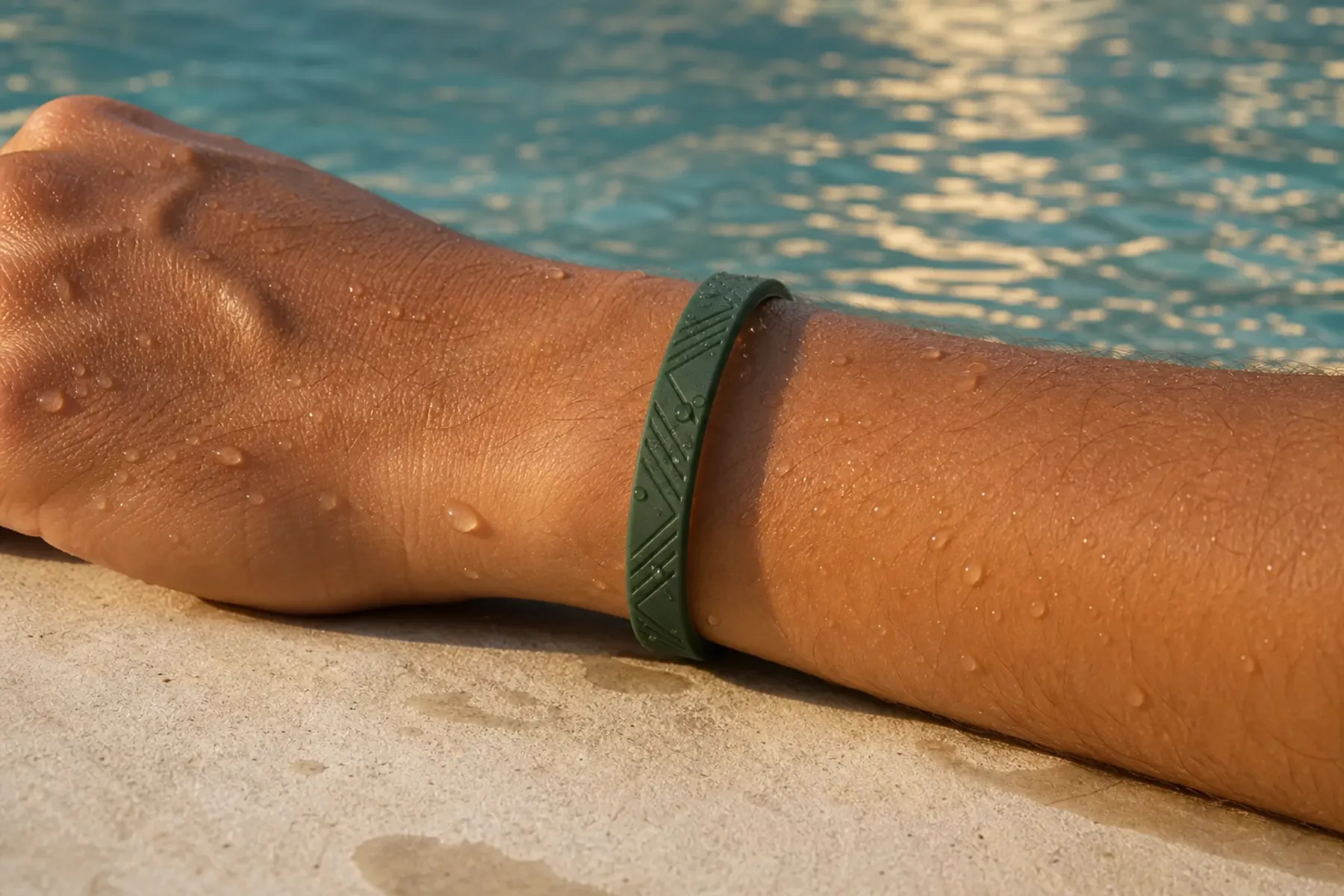
A filled deboss is the specification we recommend where the band is worn all week. The colour sits in the recess rather than on the surface, so sunscreen and towel abrasion dull it far more slowly than a printed layer, and the mark still reads when the band is wet.
Behaviour in spa and pool conditions
This model spends its life around water, oils and treatment products. Silicone handles all of them, but oils and balms leave a residue that both dulls the surface and makes the closure slippery to operate, which is a small but real annoyance in a wet-room environment.
Where a property runs heat experiences — saunas, steam rooms, hot tubs — that exposure should be part of the sample test rather than an assumption. Repeated heat cycling is harder on any moulded part than a swimming pool is, and it is exactly the use a wellness programme will put the band through daily.
What we ask a spa property to test on the sample:
- Repeated heat cycling if saunas or steam rooms are in scope
- Contact with treatment oils and balms, then closure operation with oily hands
- Read behaviour at treatment-room and locker readers, not only at reception
- Legibility of the mark after a week of daily use, wet and dry
Issue and recovery in a member programme
Wellness programmes often mix hotel guests with local members, which means two populations with different reissue behaviour. Members keep a band for months and expect it to still look presentable; guests keep it for days. Where both exist, we usually specify the same construction in two colours rather than two constructions, so the operating difference is visible but the stock is simple.
For a member population, the reorder record matters more than usual — a replacement issued a year later should be indistinguishable from the original, which means holding the artwork revision, colour reference and credential input as one reference from the first order.
When this is the wrong model
It is the wrong choice where the band has to be tamper-resistant. The closure is designed to be opened by the wearer, so controlled access to a paid zone needs a one-way closure instead.
It is also the wrong choice for a water park or a children’s programme, where the strap section is too fine for the mechanical abuse and the adult adjustment range is unsuitable.