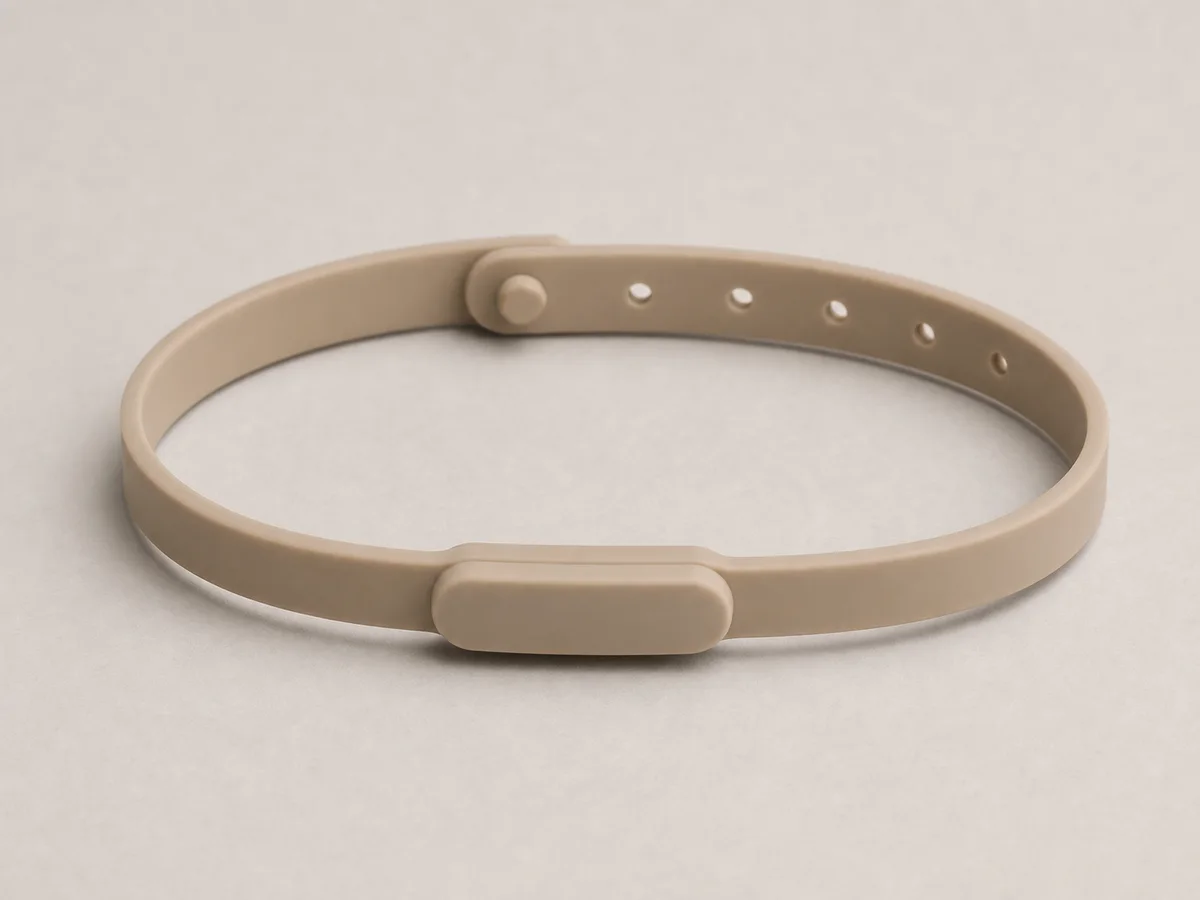
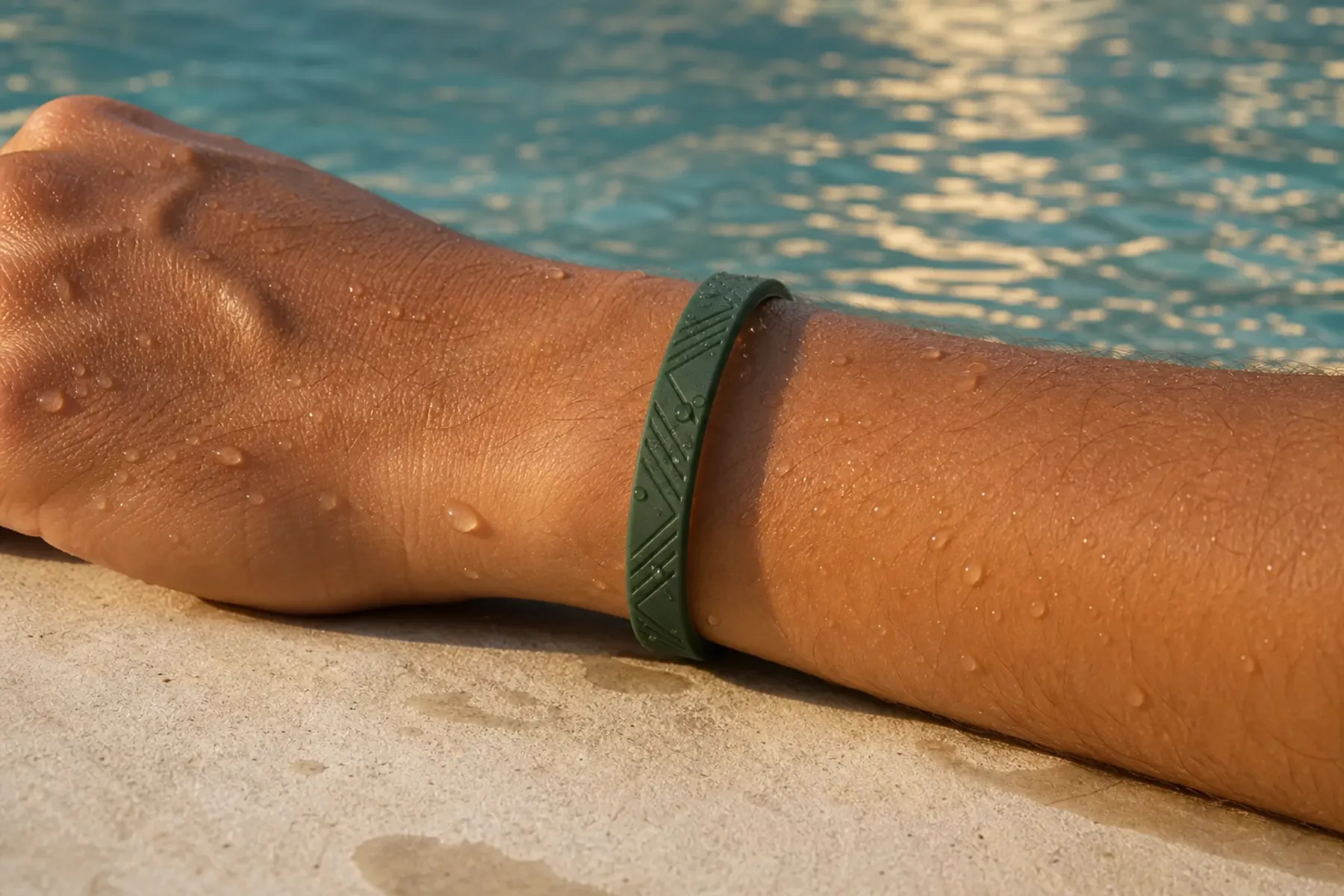
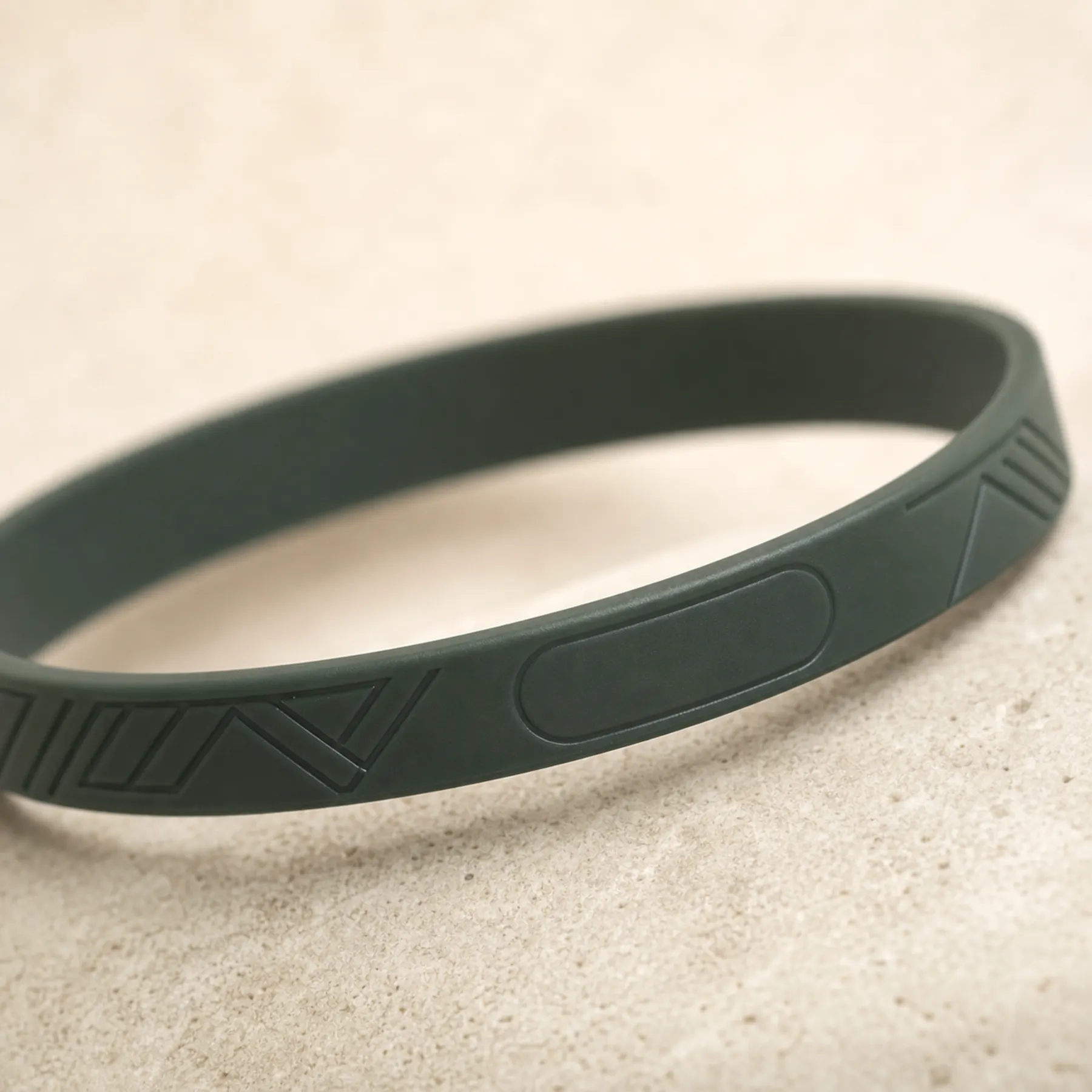
The width is set by physics, not by styling
An RFID credential needs an antenna, and an antenna needs area. Narrowing a band past the point where that area fits does not produce a slimmer credential; it produces a credential with a shorter working distance. This model sits at the practical floor — the narrowest section that still houses a module we are willing to put in front of a door reader.
That is also why we specify high frequency here as a default. Low-frequency antennas want more turns and more space, and at this width the compromise starts to show at the reader rather than in the finished look.
Why properties choose it
An adult-only resort that issues a conventional pool band discovers a specific failure: the band gets taken off before dinner and left on a nightstand, which is precisely when the guest needs it to get back into the room. The credential fails not technically but socially.
A band that reads as a plain bracelet does not trigger that. It is a smaller design decision than it sounds and it changes the operating result, because a credential that is worn is a credential that works.
Read behaviour to confirm before committing
A smaller antenna means a shorter working distance, and the difference shows up at the least convenient readers: recessed door units, readers behind thick escutcheons, and any reader mounted on or near metal. It rarely shows up on a desk-top test unit, which is why a desk test is not sufficient evidence for this model.
We ask for a production-realistic sample to be presented at the actual door readers, the lift reader if there is one, and any locker or gate in scope. The result is recorded per reader type, so the property knows where a second presentation may be needed rather than discovering it at handover.
This is the one model where we treat a desk-only read test as insufficient. Confirm behaviour at recessed and metal-adjacent readers before approving the run.
Decoration at this scale
There is no artwork panel worth the name. What works is a small debossed mark, a fine laser detail or nothing at all — and “nothing at all” is a legitimate specification here, with the property identity carried by colour and finish instead of a logo.
Properties that need the band to carry visible branding should accept that this is not the model for it. Trying to place a full mark on this section produces something illegible that also stops looking discreet, which loses both arguments at once.
Wear, sizing and the adult-only constraint
The low-profile closure is deliberately unobtrusive, which also makes it slightly less positive to fasten than a chunky snap. Staff should fit it at issue rather than handing it over, and the fit should be checked once — a band worn loose at this width rotates, and a rotated minimal module can end up under the wrist where no guest presents it.
It is not a children’s product. The adjustment range is adult, the closure is not designed to resist a child working at it, and the geometry offers nothing that makes it safer in that use. Properties issuing to families should pair this model for adults with a closed-loop round band for children.
When this is the wrong model
It is wrong wherever the credential has to be seen and read by staff — a tiered all-inclusive, a day-pass operation, an event. Discretion is the entire point of the model, and discretion defeats visual access control.
It is also wrong in high-abuse wet environments. The section that makes it elegant is the section that has least material to resist a hard pull, so water parks and activity-led properties should specify the thick-strap oblate model instead.