What synthetic stock fixes
Paper bands fail in water in a specific and predictable way: the fibres swell, the stock loses strength at the fold, and the band tears where it bends against the wrist. On a hot day at a pool that can happen within hours, and the property spends the afternoon reissuing.
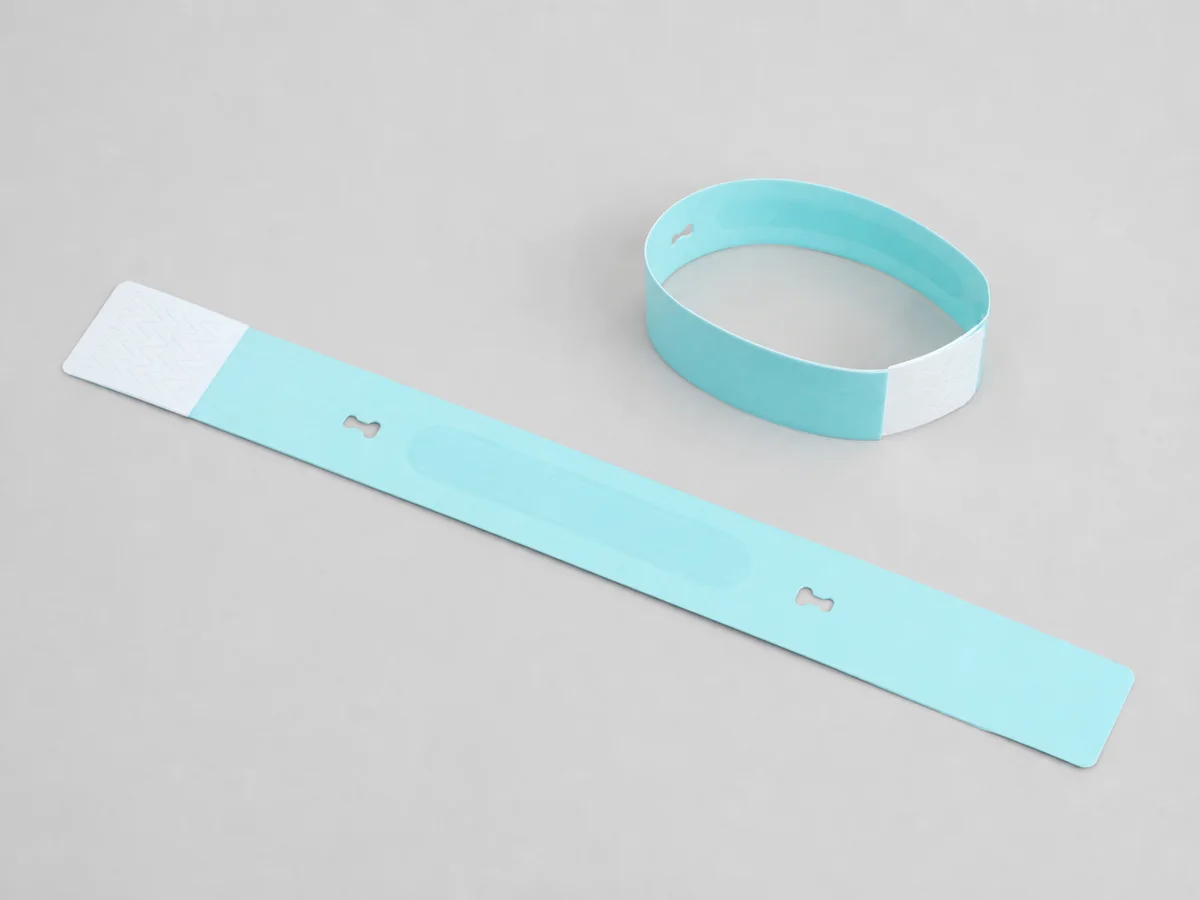
Synthetic stock has no fibre to swell. It stays at full strength wet, folds without weakening and cannot be torn along a line by hand — which is also why the closure has to be engineered to fail rather than the material.
Tamper evidence on a band that cannot tear
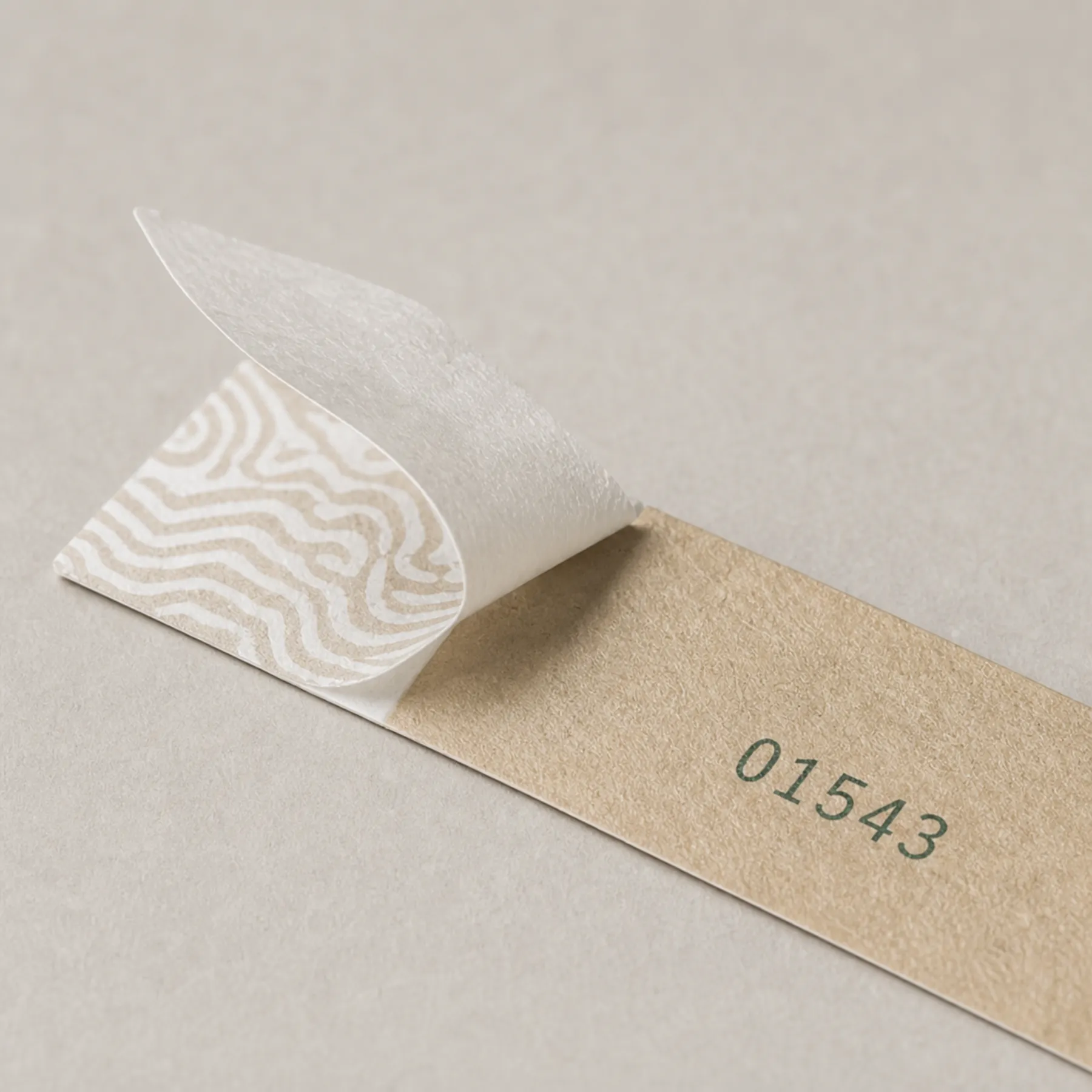
Because the stock is strong, removing the band would otherwise be easy and invisible. The security lives in the closure: die-cut slits through the adhesive area mean that peeling the tab destroys the pattern, leaving a band that visibly cannot be re-adhered.
That gives staff something to check in two seconds at a gate. Tamper evidence is only worth specifying if a member of staff can recognise it without training and without stopping the queue.
Include a deliberately tampered sample in the first delivery and keep it at the gate. A control sample teaches recognition faster than any briefing, and it is the difference between a security feature and a security intention.
Pre-printed quality, and what it costs in flexibility
Because the artwork is printed as a run rather than at a desk, it can carry full-colour photography, fine type and a proper brand treatment — a band that looks like the property rather than like a receipt. Sequential numbering can be printed in the same pass, which gives an audit trail without any desk process.
The cost is that the band says the same thing for every guest. Where each guest needs a different name, date or package on the band, a desk-printed thermal band is the correct product, and many properties run both — pre-printed for general admission, thermal for packages.
Colour as an admission system
The most common use is colour by day or by admission type: a different colour band for each operating day, so a band from yesterday is instantly wrong. That is a simple, robust control that survives busy periods when nobody has time to read anything.
It works only if the colours are genuinely distinguishable when wet and in shade, and if the sequence is not predictable to a regular visitor. Both are worth deciding at the specification stage rather than by picking pleasant colours.
Adding RFID to a day band
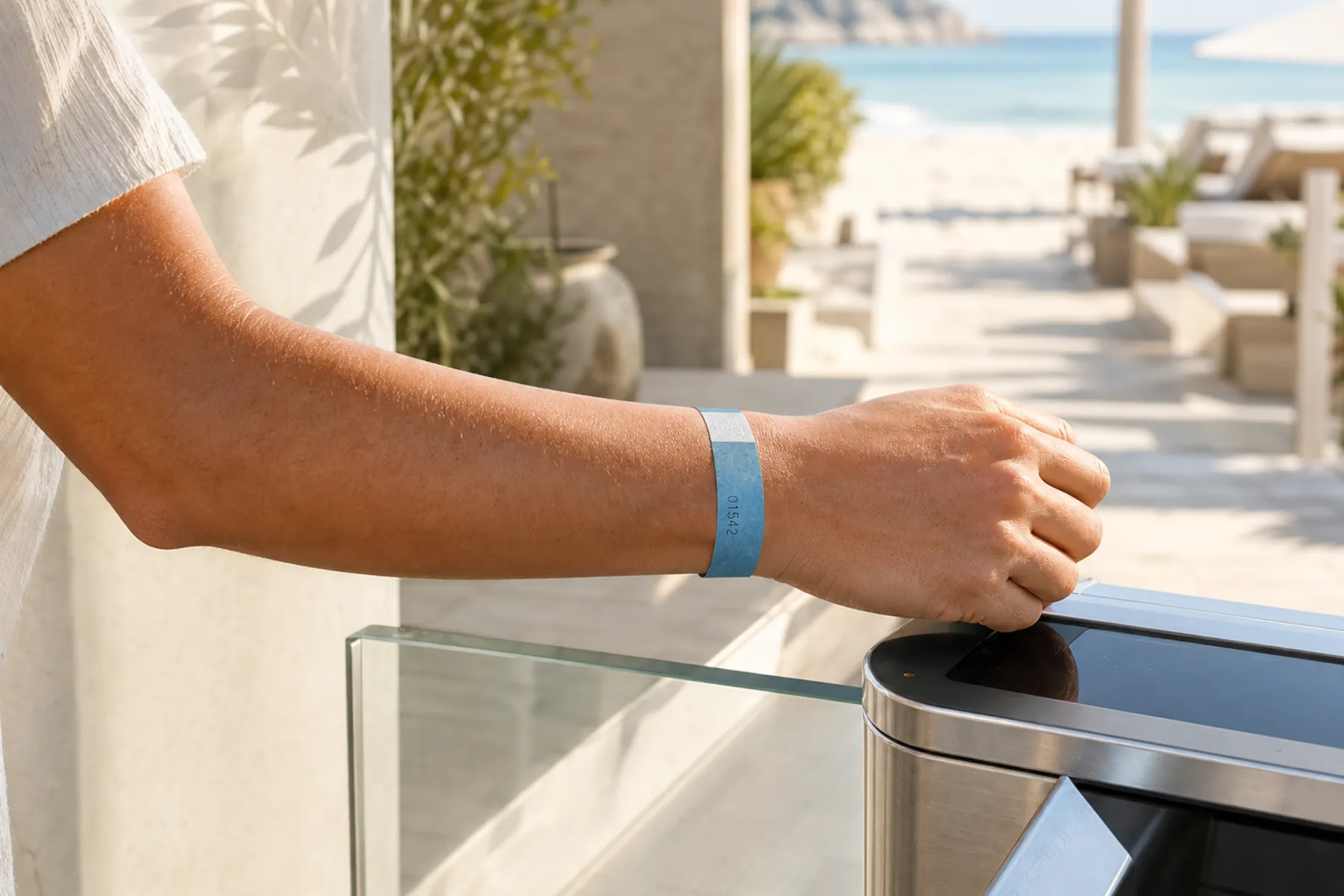
An RFID variant makes the band a machine-readable credential for lockers, cashless spend or gate counting, while the printed face keeps carrying the visual control. For a water park that combination is usually the whole system.
What the credential is allowed to do is set by the property’s platform rather than by the band, and the read has to be proven wet, in motion and one-handed — the state a guest is actually in at a locker bank.
When this is the wrong model
It is wrong for multi-day stays, where a band worn for a week should be a fabric or moulded construction rather than an adhesive one.
It is wrong where guest-specific information has to be on the band, and it is wrong wherever the property wants to recover and reuse credentials — this one is consumed by design.