What the material actually changes
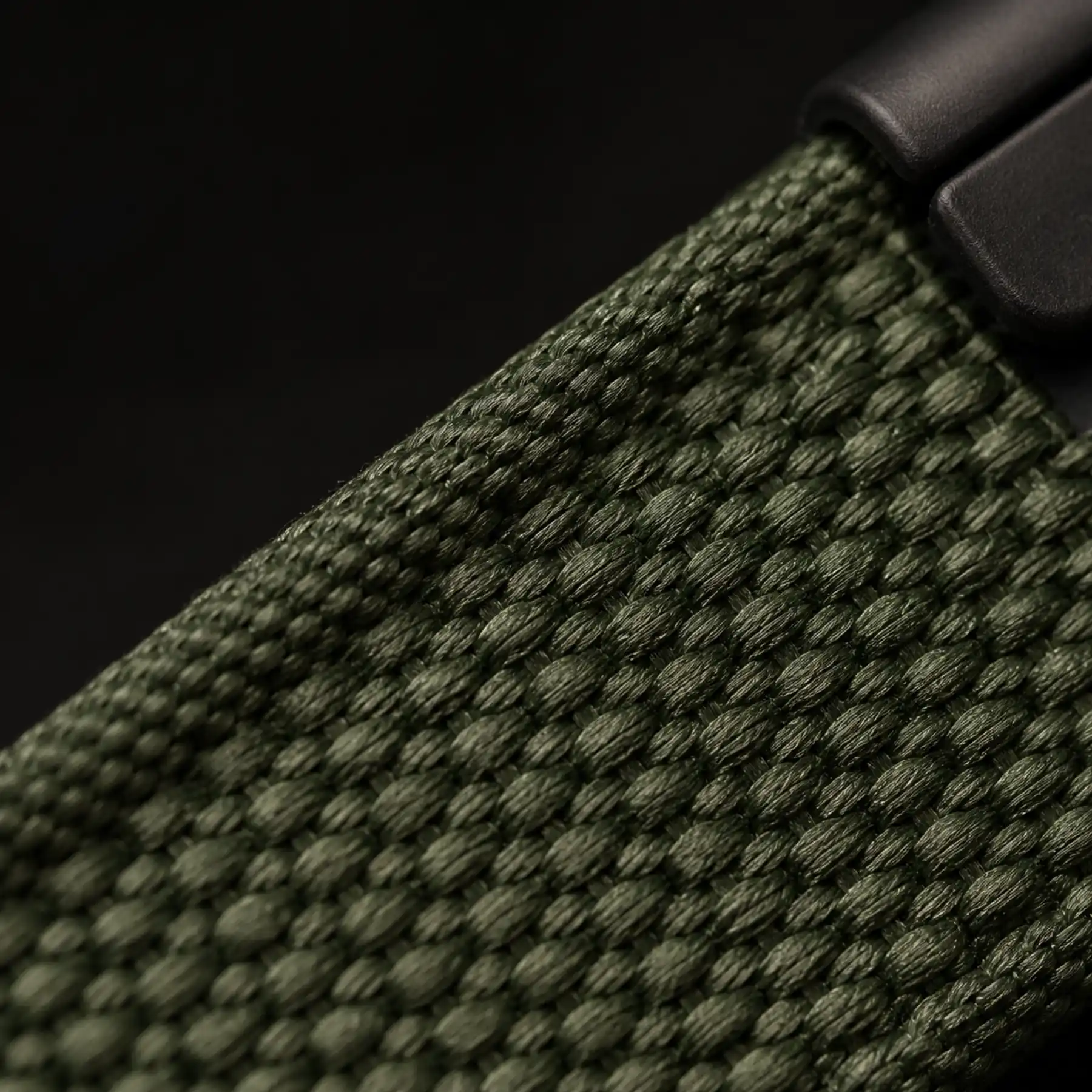
In the hand, very little. Recycled-PET yarn weaves, wears and washes much like conventional polyester, and a guest will not identify it by feel. The reason to specify it is a materials policy, not a performance one, and we would rather say that plainly than dress it up.
Where it does differ is dyeing. Recycled yarn can take colour slightly differently batch to batch, so a colour that matched perfectly on the first order can sit a shade off on the third. Properties that care about exact colour continuity should hold a physical reference and reorder against it rather than against a name or a screen value.
Claiming it honestly
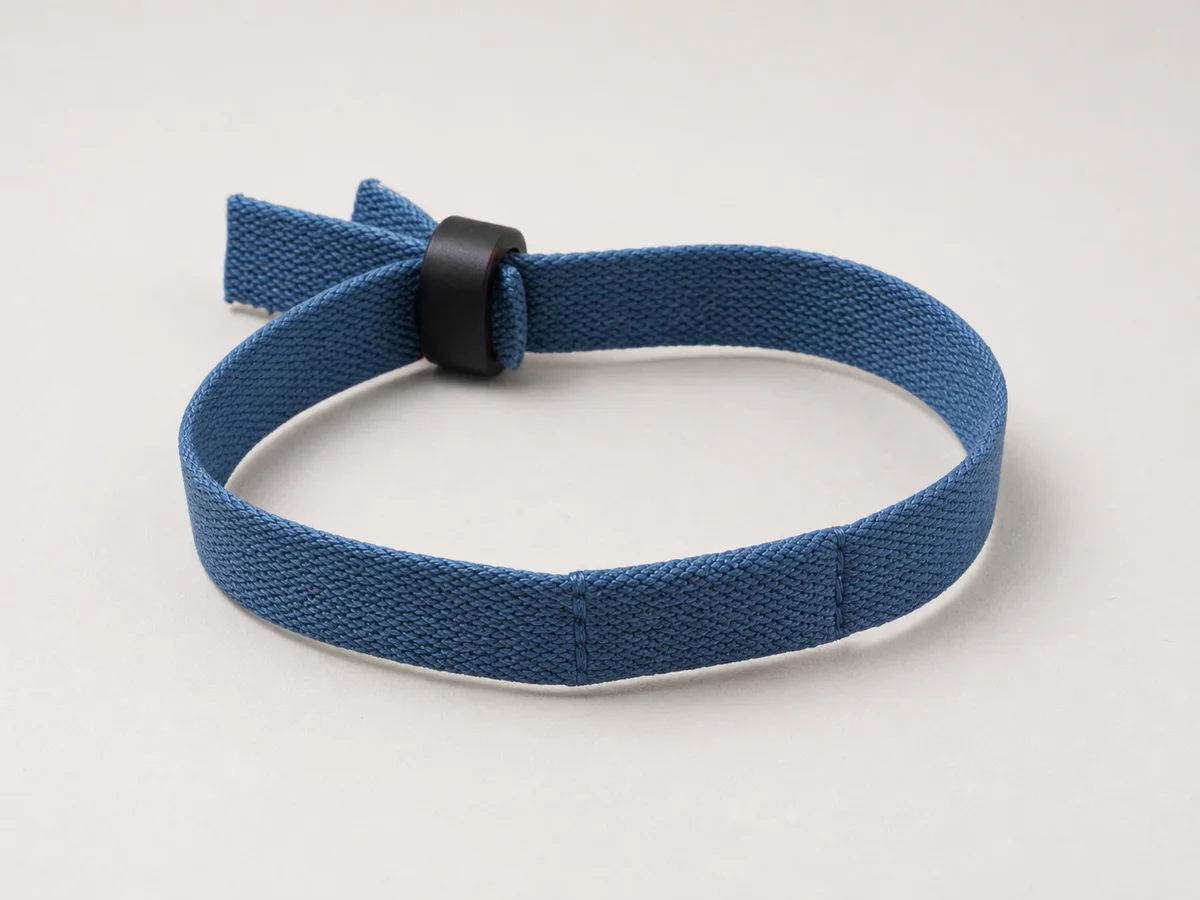
The band is a multi-material product: a woven strap, a sealed electronic module and a plastic closure. A recycled strap does not make the finished product recycled, and any statement the property publishes should describe the component rather than the whole.
That is not caution for its own sake. Procurement teams increasingly ask for evidence at the level of the run, and a broad claim that cannot be evidenced is worse for a property than a narrow claim that can. We issue a material declaration against the production run, so the property is quoting a document rather than a category.
The questions procurement usually asks, and should:
- Which component is recycled, and what proportion of the finished band is that component?
- What documentation accompanies this specific run, not the product line?
- What happens to the electronic module at end of life, and who removes it?
- Is the closure the same material as the strap, and if not, what is it?
End of life, stated without overreach
The strap and the module have different disposal routes, and separating them is a manual step somebody has to actually perform. A property that intends to separate them should say who does it and when — at checkout, at teardown, at the end of a season — because a route nobody performs is not a route.
Where no separation route exists, the honest position is that the band is disposed of as a mixed product. Saying so is defensible; implying otherwise is the kind of claim that does not survive scrutiny.
Wear across a multi-day event
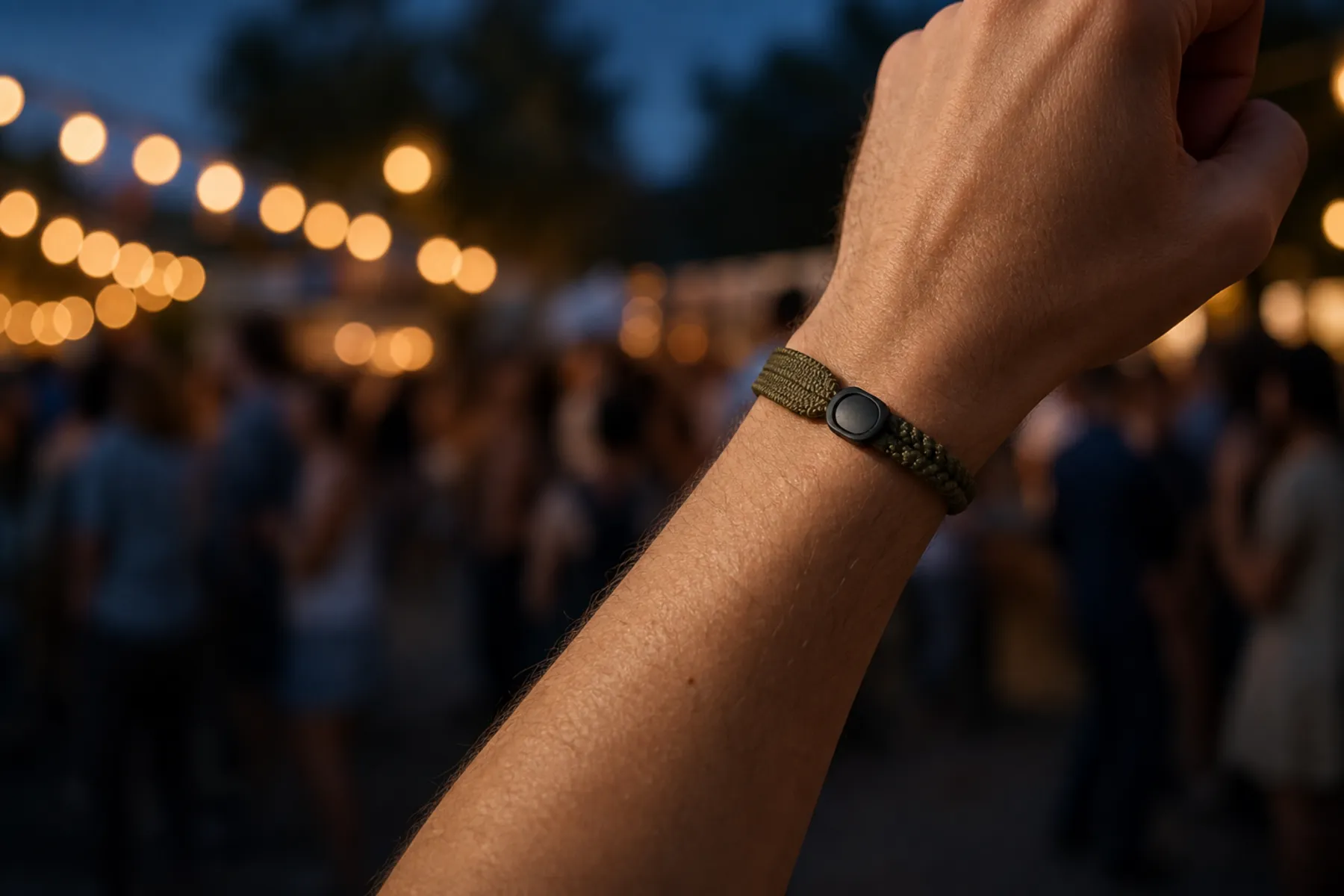
The band holds up over several days of continuous wear, including sleeping and showering, which is the normal profile for an event credential. Colour holds well through that; the surface softens slightly, which reads as broken-in rather than worn out.
Sustained immersion is the limit, as with any woven construction. A band that is in a pool for hours daily stays damp, and damp fabric against skin for a week is a comfort complaint waiting to happen.
Ordering and colour continuity
Because dye uptake can move between yarn batches, we recommend approving colour on a physical sample from the production yarn rather than on a digital reference, and holding that sample as the reorder standard. It is a small discipline that prevents a visible mismatch when a property runs the same band across several seasons.
The approved sample, artwork revision, colour reference, credential input and the run’s material declaration are held together as one reorder record.
Minimum order is 500 pieces per artwork, with 14–21 days production after artwork approval. A colour variant is a separate count, and on recycled yarn a colour variant is also a separate colour approval.
When this is the wrong model
It is wrong where the property wants a visible material story rather than a documented one. Recycled polyester looks like polyester; a cork, wood or cotton construction communicates the intent visually in a way this does not.
It is also wrong for continuous water use, and wrong where the property cannot support the claim with a route and a document — in which case a conventional woven band, honestly described, is the better specification.