Printing at the desk changes what a band can say
A pre-printed band says what the whole run says. A band printed at issue says what this guest bought: the package, the session, the expiry, the name. For a property selling timed or tiered access, that difference is the product — staff can read entitlement off the band without a lookup.
It also removes the stock problem that tiered pre-printed bands create. One blank stock covers every tier, so there is no risk of running out of the tier that sells best on a Saturday.
Direct thermal, and its one hard limit
Direct thermal printing works by heating a coated stock so the image appears in the material. There is no ribbon and no ink, which is what makes desk printing cheap and reliable. The consequence is that the image responds to heat for the rest of its life.
A band left on a car dashboard or in direct sun for an afternoon will darken, and a badly darkened band becomes unreadable. In practice that is a non-issue for a credential worn for a day and a real one for a band issued as a multi-day pass in a hot climate — where a pre-printed synthetic band is the better specification.
Direct thermal images darken with heat and friction. Specify it for same-day and short-duration credentials; for multi-day passes in hot conditions, use a pre-printed synthetic band instead.
Stock and printer are one decision
Thermal stock is matched to the printer that images it: heat settings, feed geometry and the sensor marks that tell the printer where a band begins. Buying stock without reference to the installed printer is the most common way a property ends up with a box that jams or prints faint.
We specify the two together. Where a property already has printers, the model and its configuration are recorded as part of the specification, and we sample on that printer rather than on ours before a run is approved.
The adhesive closure and what tamper-evidence means
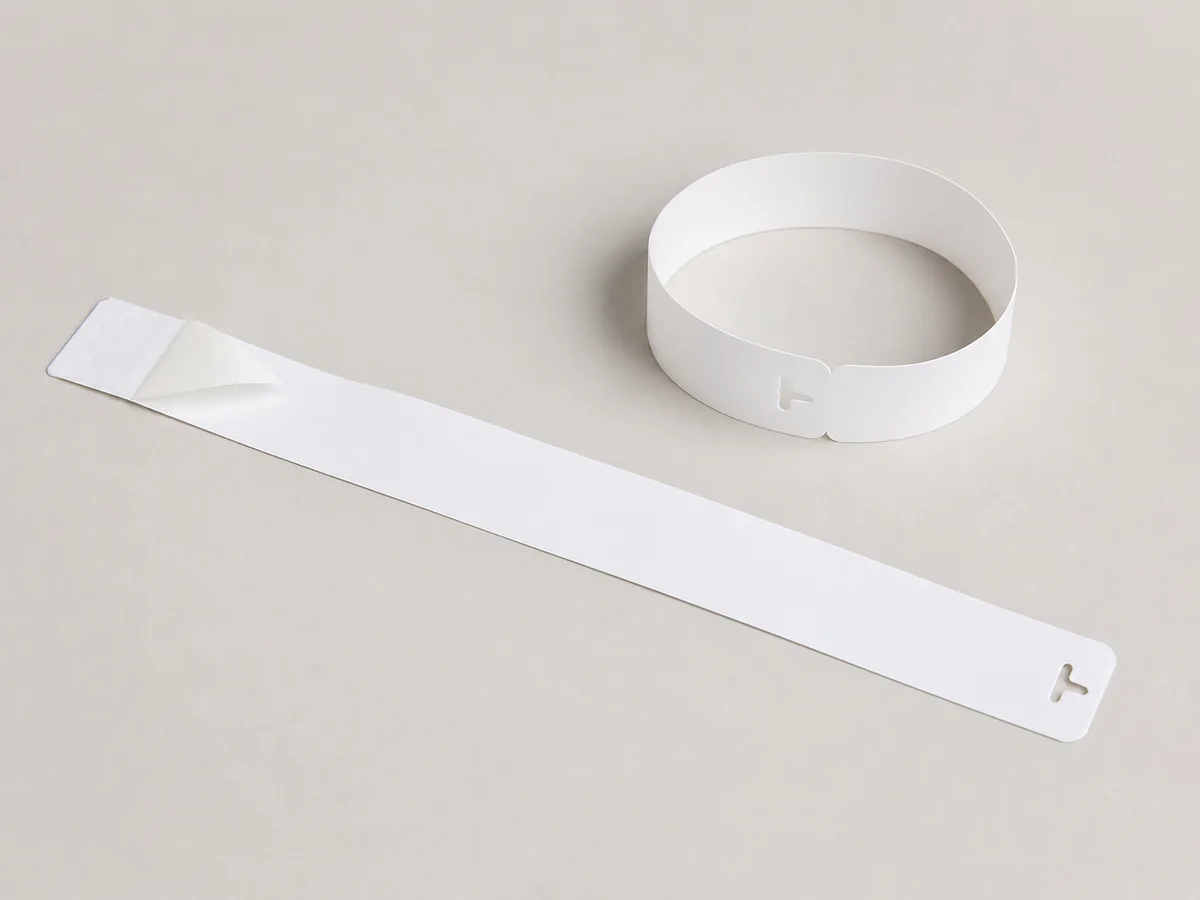
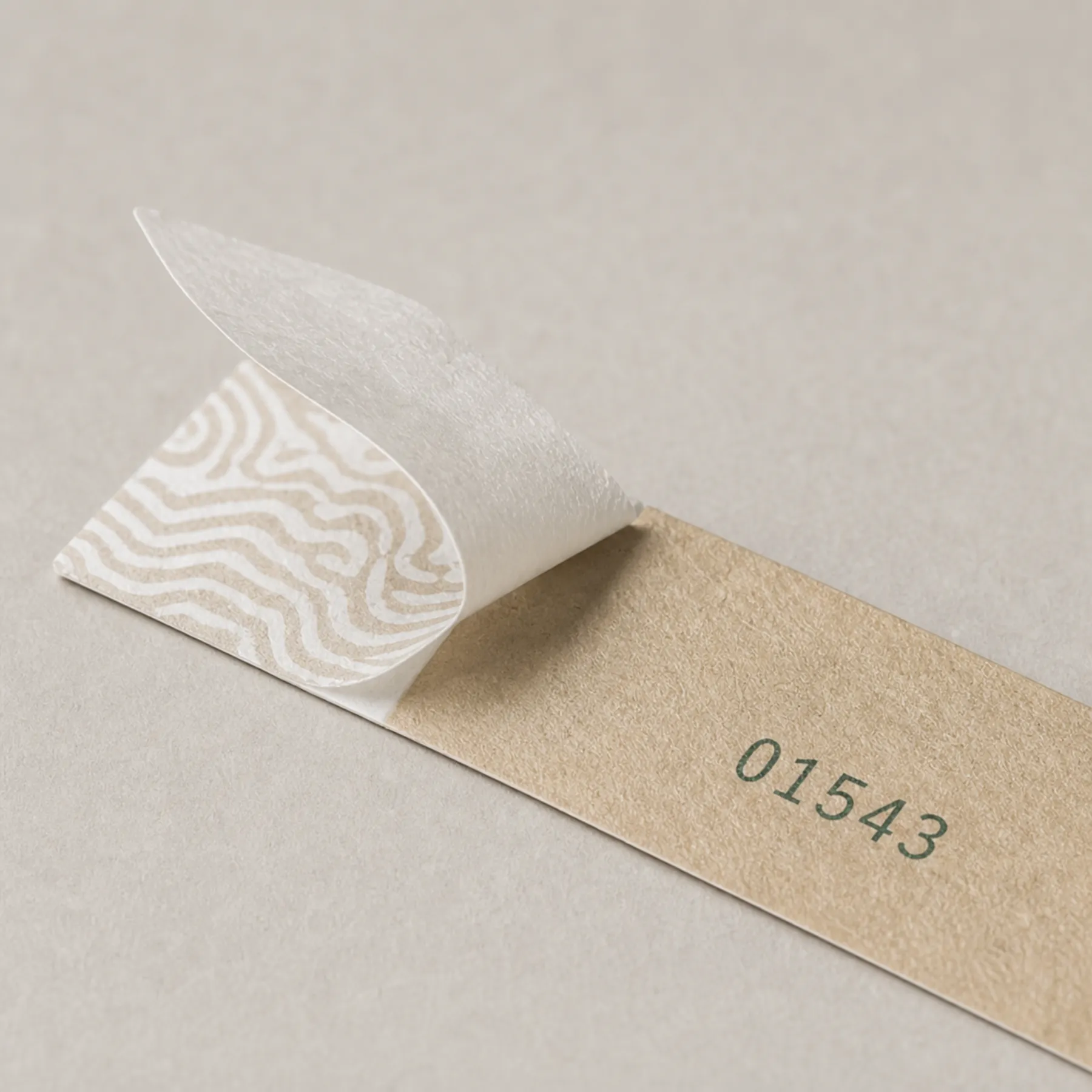
The closure is an adhesive tab with die-cut slits: separating it tears the band rather than releasing it. That gives visible tamper evidence, and it is what stops one paid day pass being worn by three people in sequence.
It also makes fit final. Staff adjust by where the tab is placed, so it should be fitted on the wearer, and the property should hold an allowance for misfits — a wrongly fitted band is a destroyed band.
Adding a credential to a printed band
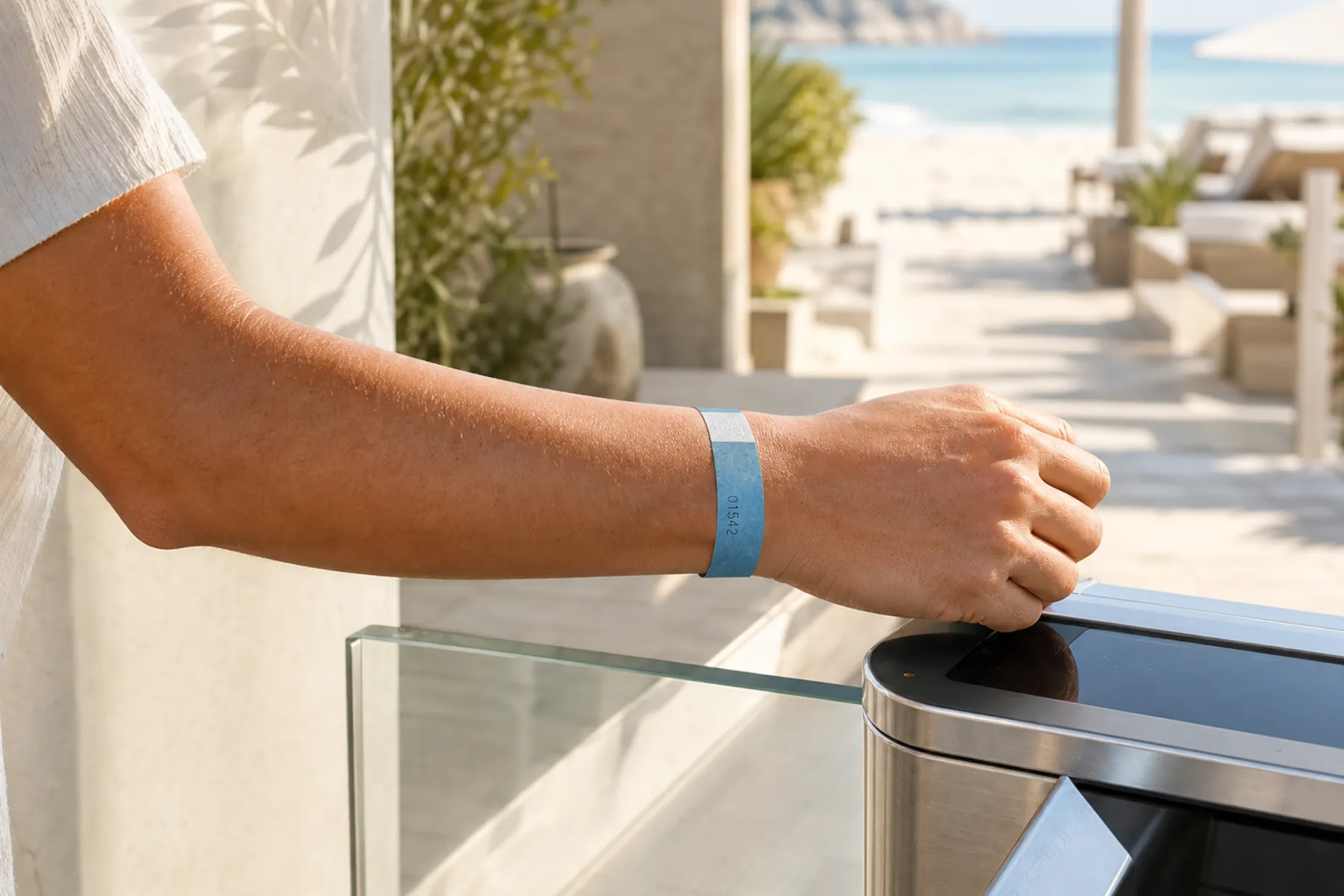
Where an RFID variant is specified, the inlay is inside the band and the printed data is on it, so the band carries both a machine identity and a human-readable entitlement. That combination is genuinely useful at a gate: the reader decides, and staff can see why.
The two have to agree, which is an issue-workflow question. The moment of printing and the moment of encoding should be the same transaction, or a property ends up with bands whose print and credential describe different entitlements.
When this is the wrong model
It is wrong for multi-day wear in hot climates, for anything that has to look premium, and for any programme where bands are recovered and reused — a single-use adhesive band is consumed on issue.
It is also unnecessary where every guest gets the same entitlement. If the band does not need to say anything guest-specific, a pre-printed band is cheaper, faster to issue and more durable.