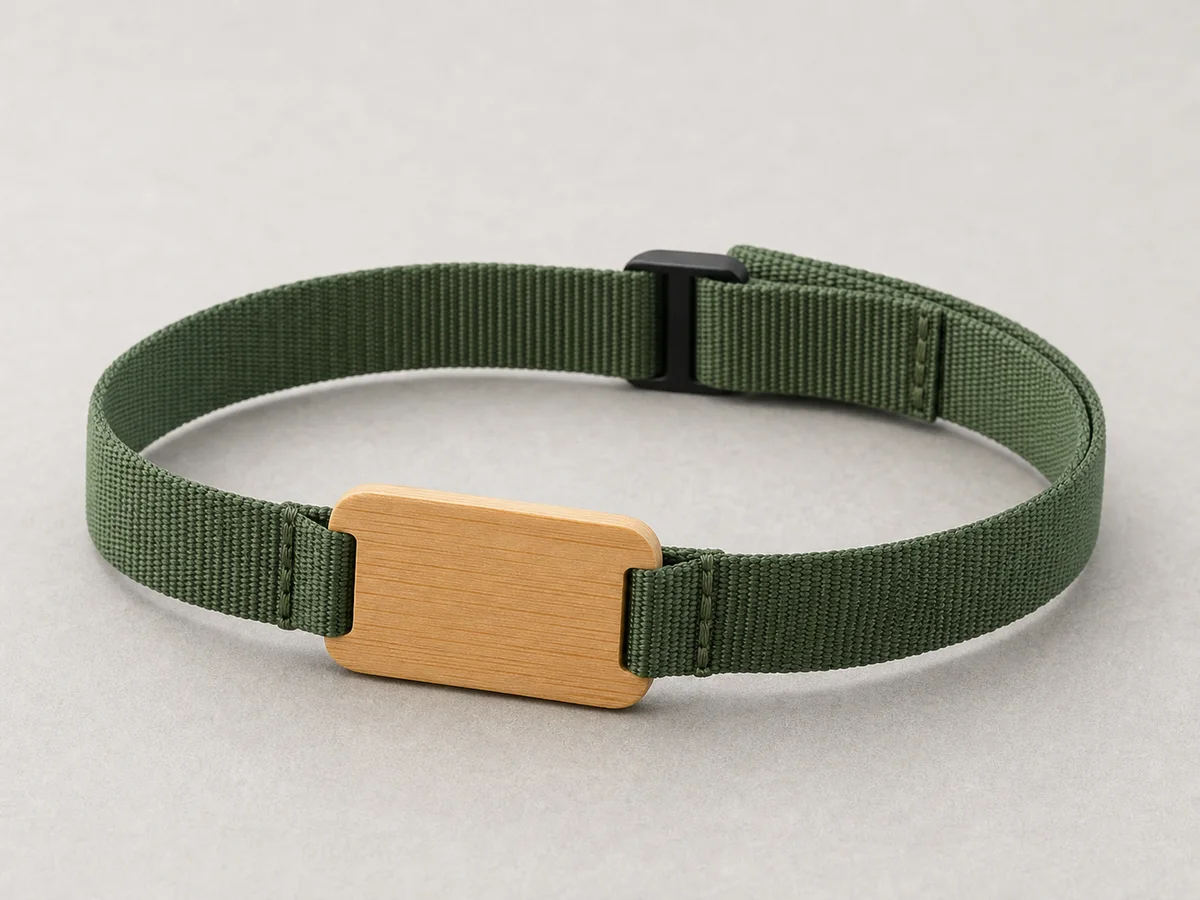

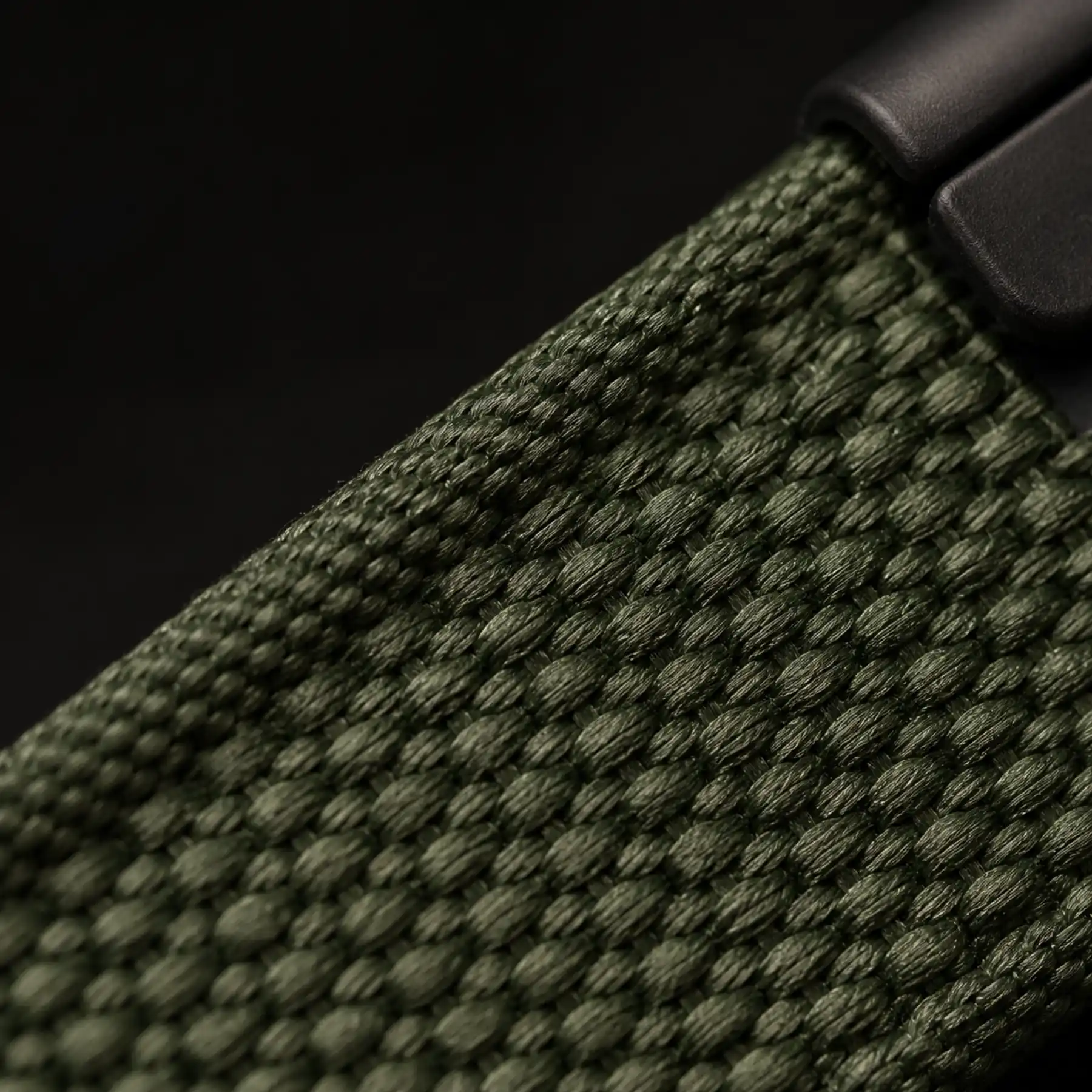
Why pair a technical material with a natural one
A recycled strap is documented and invisible. A bamboo face is visible and harder to document at the same level. Together they cover both requirements, which is the actual reason properties end up specifying this combination rather than an aesthetic preference for the pairing.
It also splits the wear sensibly: the strap does the work of wrapping a wrist repeatedly, which is what synthetic yarn is good at, and the face carries the identity, which is what a natural surface does better than a woven panel.
Two materials, two claims, no merged claim
The strap statement describes the yarn. The face statement describes the bamboo. There is no statement that describes the band, because the band also contains a sealed electronic module and a slider, and no honest sentence covers all four.
That discipline matters most for exactly the properties who choose this construction, because their guests and their procurement teams both read the small print. A narrow, evidenced claim is stronger in that room than a broad one.
What we put on record for a run of these:
- The yarn content of the supplied strap, as produced for this run
- The bamboo face specification and finish, as approved
- What the sealed module is and that it is not covered by either statement
- The disposal route the property intends, and who performs the separation step
How the two behave differently in service
The strap tolerates repeated wetting and dries quickly. The face tolerates splashes and does not tolerate immersion. That mismatch is the thing to design around: the band as a whole is limited by its face, not by its strap, and specifying it as a splash-tolerant product rather than a wet one keeps that honest.
Where a property wants the same documentation story in a genuinely wet environment, the answer is a recycled-PET strap with a moulded face rather than a wood one — less visible intent, more resilience.
Decoration across two surfaces
The face is engraved and the strap is woven, which means neither carries a printed layer that can wear. It also means the two carry different levels of detail: the engraved face holds a fine mark, the jacquard strap holds a bolder repeat.
The most common mistake is putting the same mark on both. A fine mark reproduced coarsely on the strap looks like a production error rather than a design decision. We usually specify the full mark on the face and a simplified device or a rule on the strap.
Colour continuity across seasons
Recycled yarn takes dye slightly differently between batches, and bamboo varies naturally. Both are manageable and neither is invisible, so we approve a range on both components and reorder against physical references rather than names.
The approved samples, artwork and engraving files, colour references, credential input and the run’s material declaration are held together as one reorder record.
Minimum order is 500 pieces per artwork, with 14–21 days production after artwork approval. A strap colour change is a separate count and a separate colour approval; a face finish change is a separate approval as well.
When this is the wrong model
It is wrong for pools, water parks and children. It is wrong where the property cannot support a documented claim with an actual disposal route, in which case a simpler construction honestly described is better.
And it is wrong where only one of the two audiences exists — a property that only needs the visible story should choose bamboo on cotton cord, and one that only needs the evidence should choose the recycled woven band.