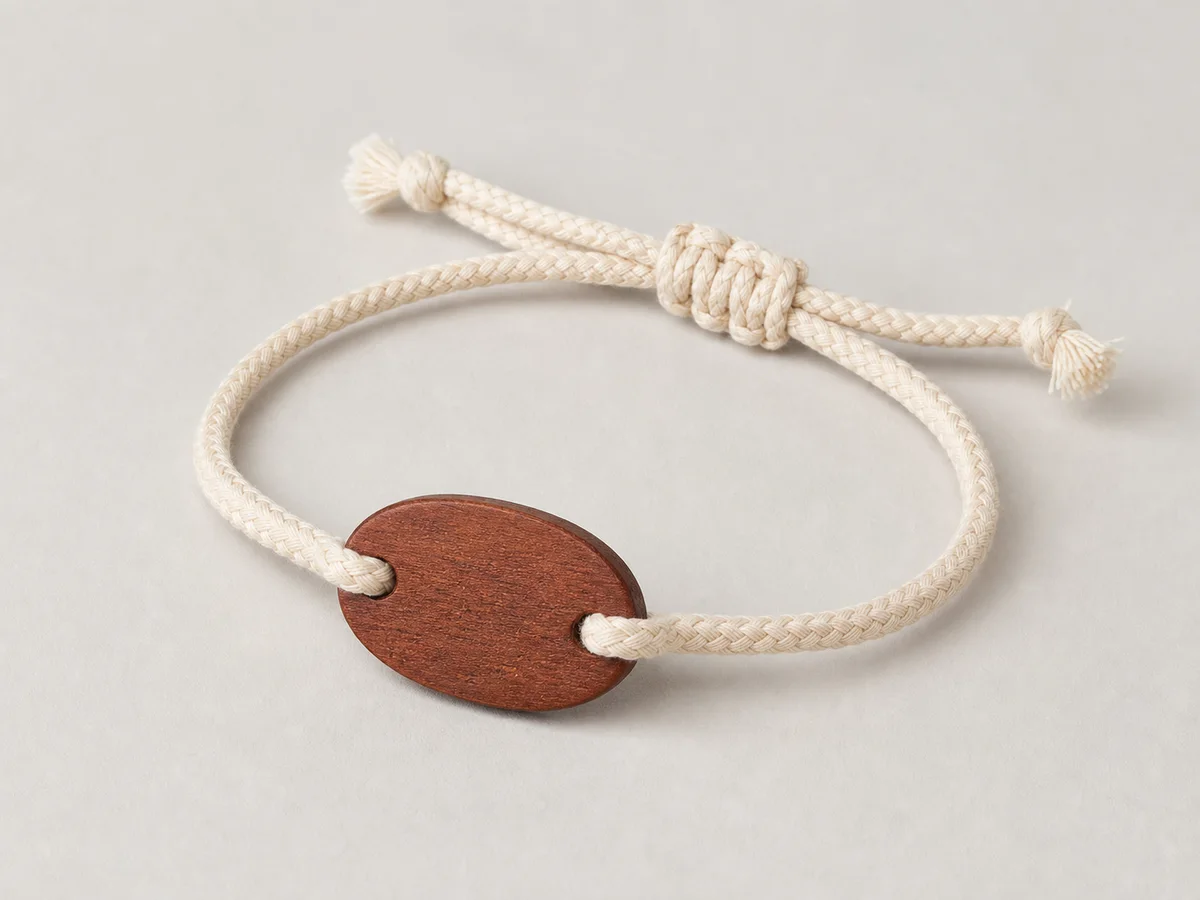
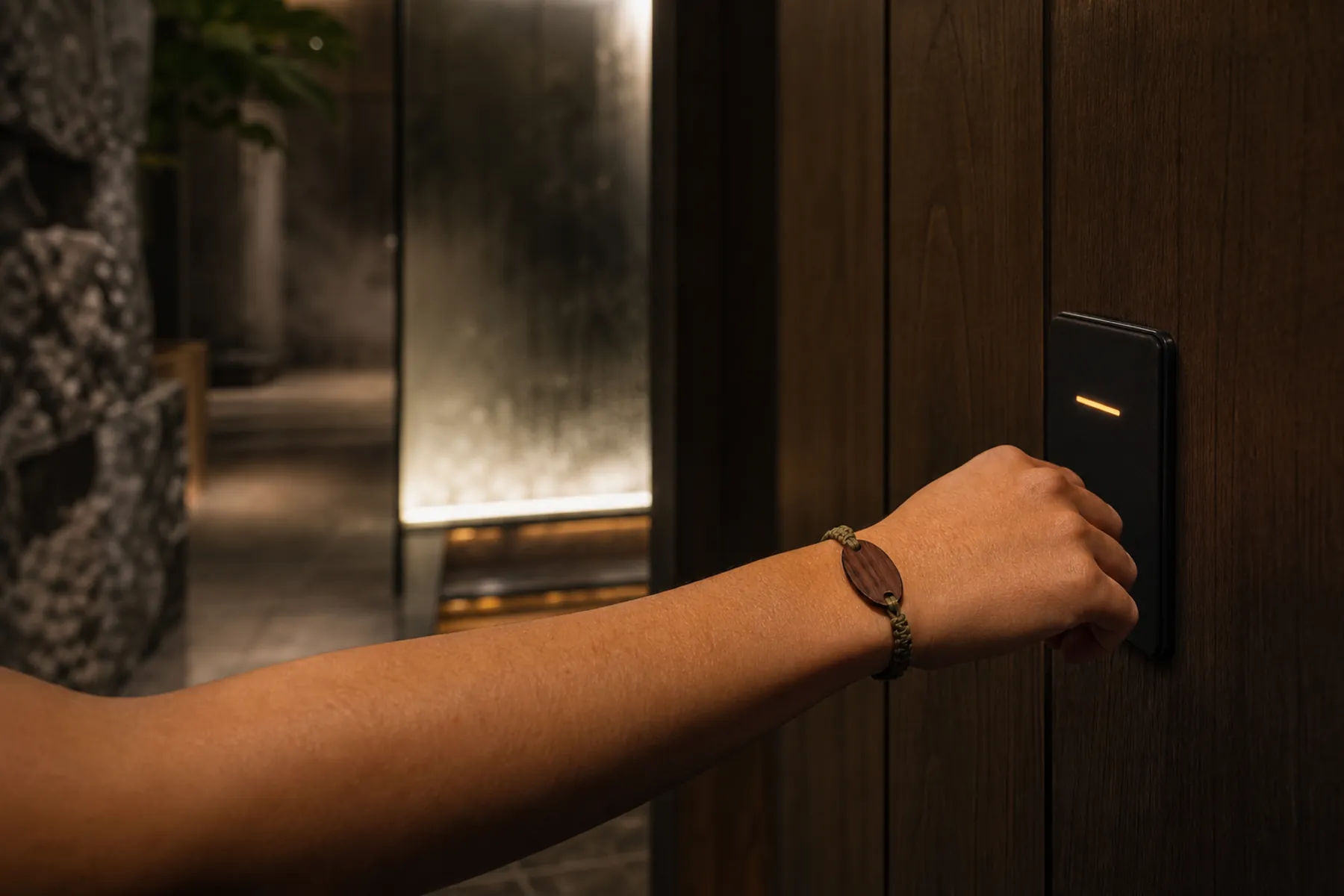
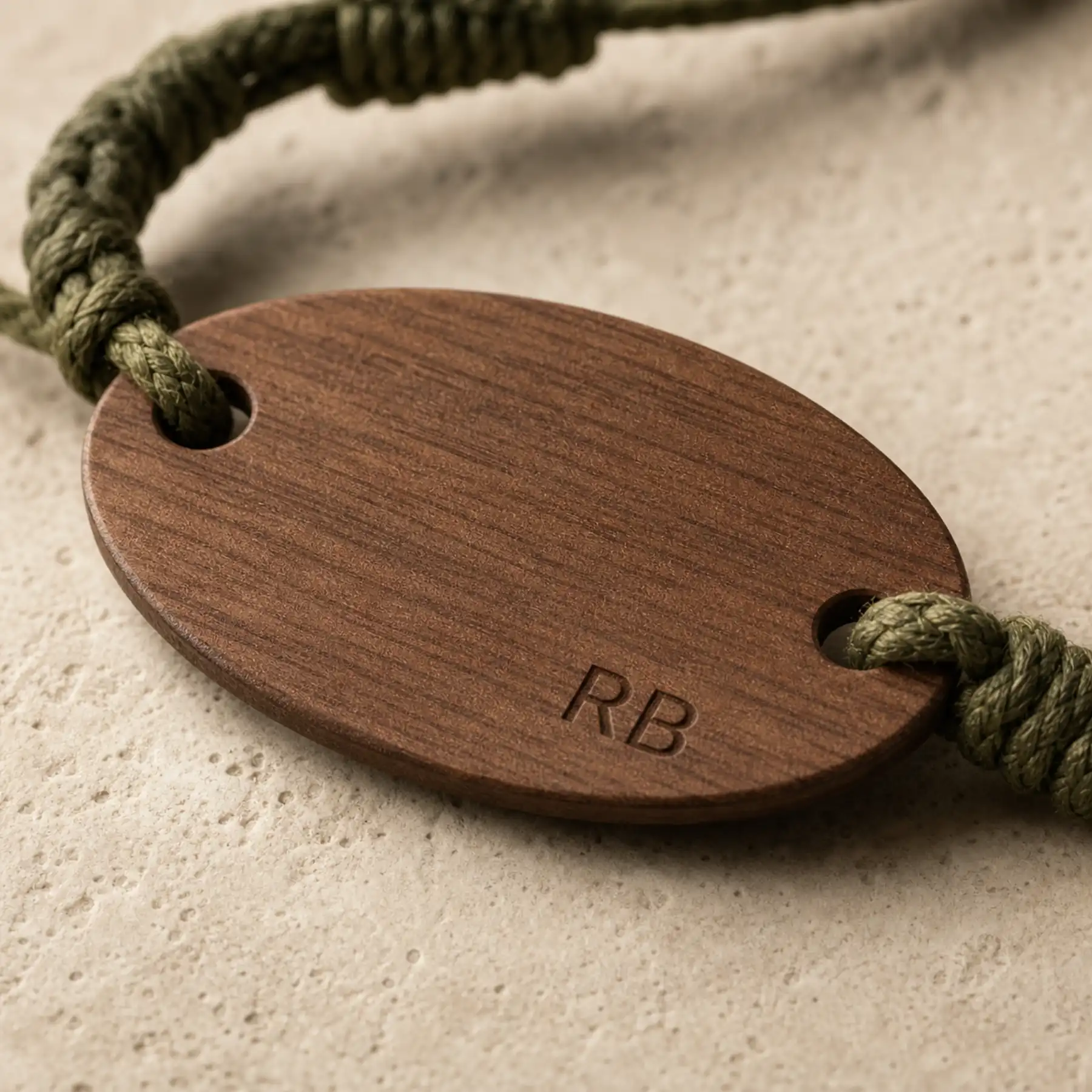
Why a darker, denser face changes the artwork
Engraving works by contrast between the burnt recess and the surrounding surface. On a pale face that contrast is high but the mark can look scorched; on a mid-to-dark hardwood tone it reads as a considered detail rather than a burn, and fine lines hold their weight instead of bleeding.
That is the practical reason to choose this face over bamboo: a property with a delicate mark, a script wordmark or a fine rule gets a better result here, and a property with a bold simple mark gets an equally good result on either.
Grain is a design decision, not a variable
Hardwood has directional grain, and grain running across a mark reads as noise behind it. We set the grain direction relative to the artwork at sampling and hold it for the run, rather than cutting faces from a blank in whatever orientation is most economical.
Natural variation between faces remains, and should. A property expecting 500 identical faces has chosen the wrong material; a property that wants a natural object accepts that two bands differ slightly and specifies a tolerance rather than a match.
For any natural-face construction we approve a light and a dark sample as the acceptable band, rather than one sample as the target. That is what makes a delivery assessable — a run is judged against the range it was approved within.
The cotton cord and long wear
A cotton-blend cord is softer and warmer against skin than a synthetic braid, which is exactly what a wellness property wants and exactly what makes it less suited to sustained wet use. Cotton holds water, and a cord that stays damp against skin for days is a comfort problem before it is a durability one.
It also takes up oils and treatment products, which discolour a pale cord faster than a dark one. For spa programmes we usually specify a mid or dark cord for that reason alone, and hold the pale option for dry-zone or short-stay use.
Sealing, and what a sealed face still cannot do
The face is sealed on all surfaces including the engraved recesses, which is what keeps the mark crisp and stops moisture entering the cut. That makes the band comfortable with rain, hand washing and poolside splashing.
It does not make it a swimming product. Repeated immersion works water into any wood-and-cord assembly through the cord channel rather than the face, and the cord is the part that will not recover. This is a band for dry and splash use, specified honestly.
Issue, adjustment and replacement
The slider adjusts continuously and needs no instruction, which suits an adult guest and a relaxed check-in. Where a property wants a fixed fit — a member programme, a fixed tier — the cord can be finished to a set length instead, which looks more considered and removes the tail.
Replacements need to match. Because the material varies naturally, a band issued a year later will not be identical, so the reorder record should carry the approved range and the engraving file together rather than a single reference image.
When this is the wrong model
It is wrong for water-led properties, children and any high-volume issue point. It is also wrong where guests wear the band continuously for weeks, since the cord is the limiting component in long wear.
Where the property wants the same warmth in a wet environment, a sealed wood face on a moulded or rope strap is the compromise to look at instead.