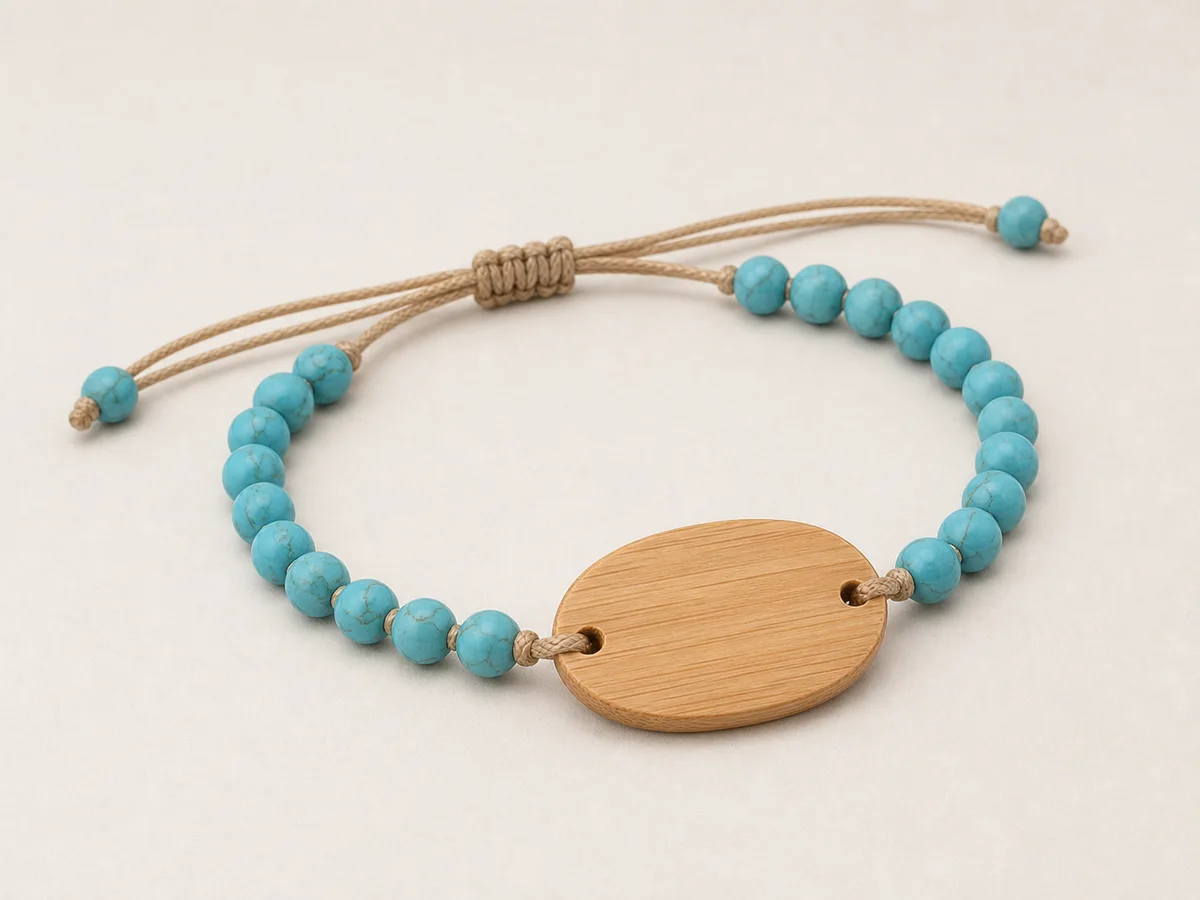
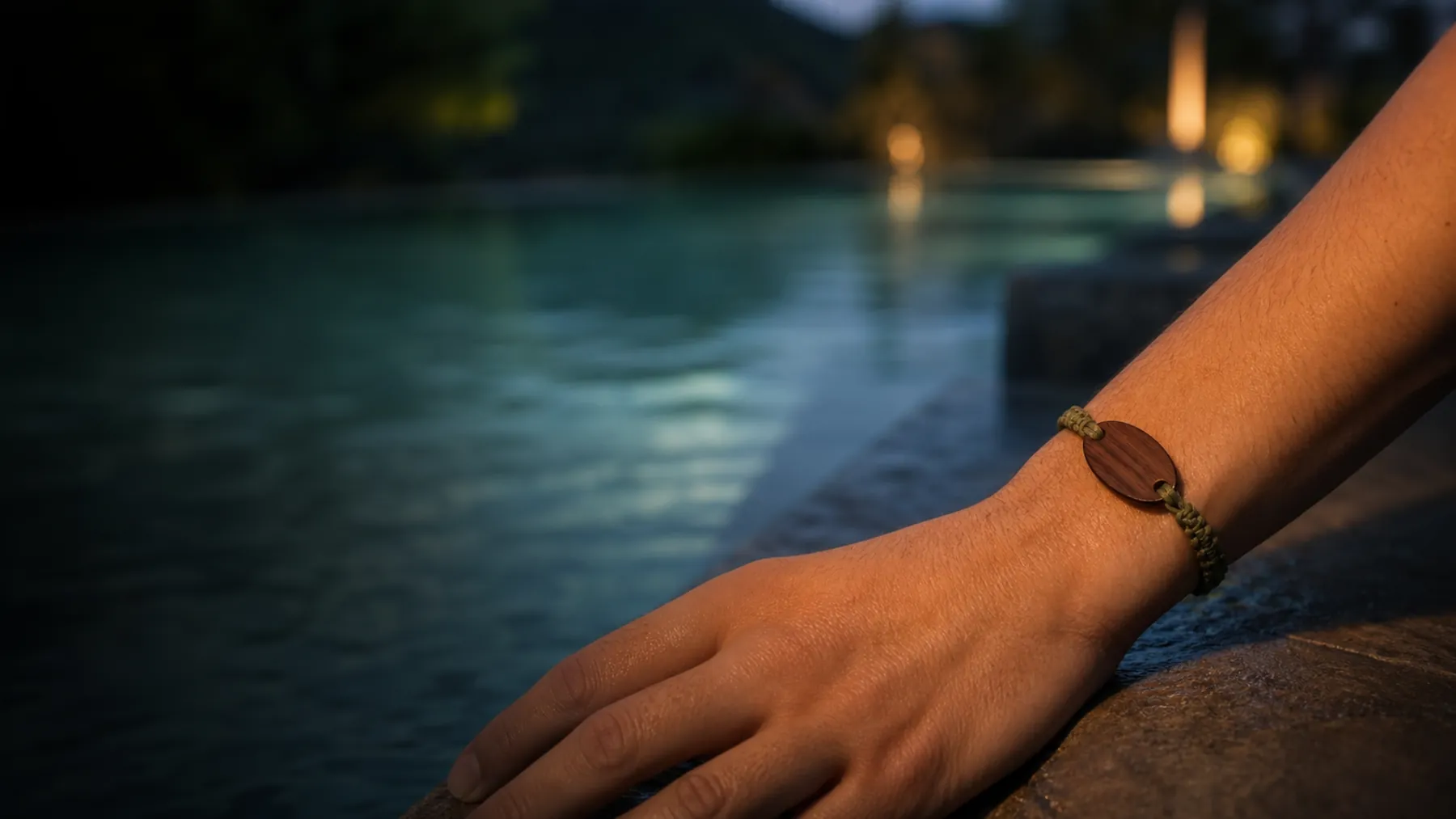
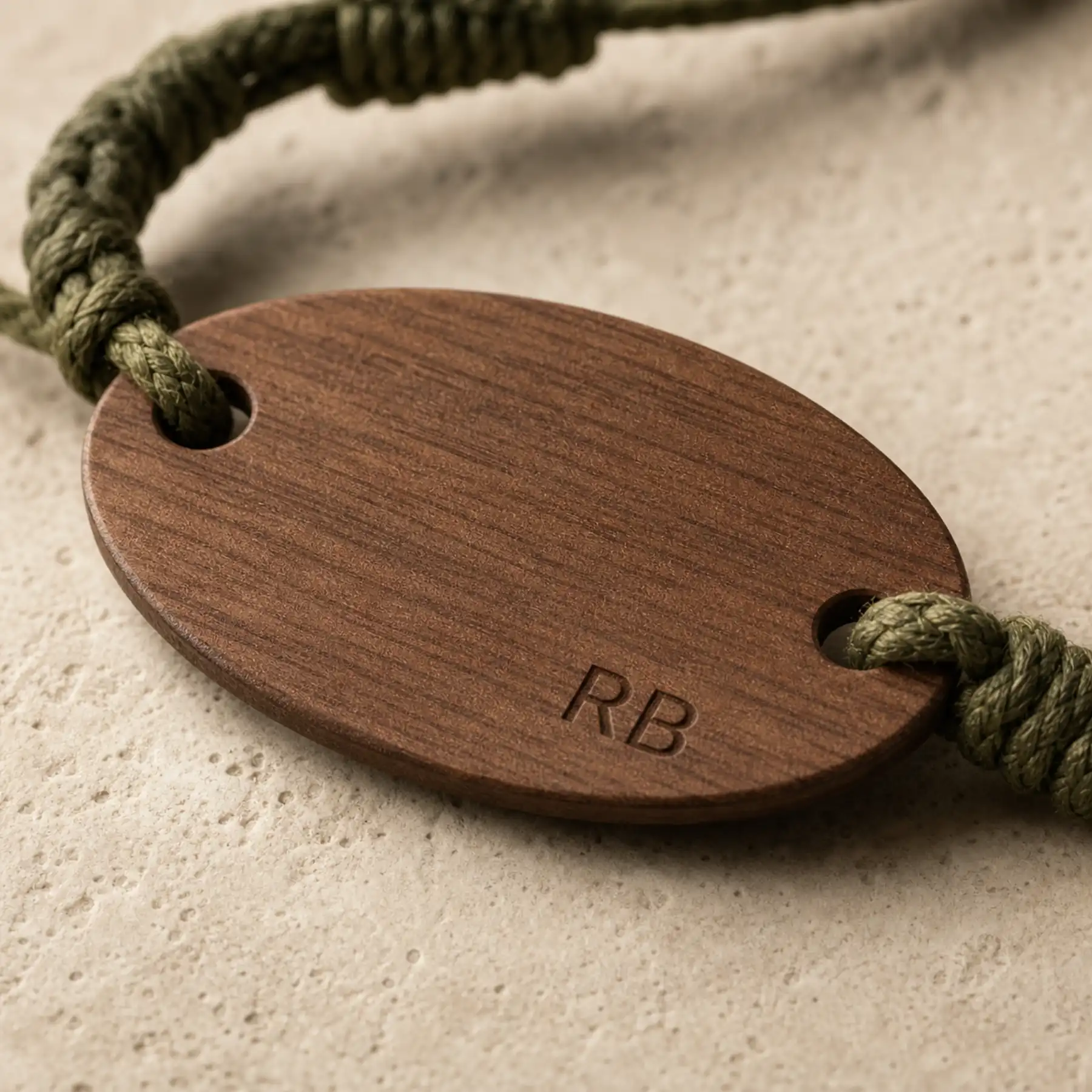
A porous stone on a human wrist
Turquoise is softer than quartz and it is porous. Skin oils, sunscreen, fragrance and cleaning products do not sit on the surface — they enter it, and over sustained contact they can darken or shift the colour. That is a well-known property of the material rather than a defect in a batch.
It changes what the band is for. A quartz band can be issued for a fortnight and recovered looking as it did; a turquoise band worn continuously for a fortnight in sunscreen will not. Specified as a short-programme credential it performs beautifully; specified as a season-long reissued band it will disappoint, and we will say so before the order rather than after.
Stabilisation, disclosed
Most turquoise used in beadwork is stabilised — impregnated to harden it and make it workable. That is standard practice and it genuinely improves durability and colour retention, and it should be stated rather than glossed over, because a property publishing a materials statement needs to know what it is describing.
We disclose the treatment on the approved sample and record it with the run. A property that specifically wants untreated stone should expect greater variation, greater fragility and a shorter service life, and should make that trade knowingly.
Stabilisation is disclosed on the sample and recorded with the run. A materials statement that describes the stone without describing the treatment is a statement that will not survive being asked about.
Where the colour earns its place
No other construction in this catalogue signals as strongly. For an arrival gift, an event credential or a single-evening programme, a turquoise band is recognised instantly and photographs unmistakably — which is precisely the job for a short-duration premium credential.
Used that way, the material’s limits never arrive. The band is worn for hours or days, not months, and it is admired rather than tested.
Handling and issue
Softer stone means chipping is a real possibility where a quartz bead would be unmarked, so packing and desk handling matter more here. Bands are supplied individually rather than loose in a box, and staff should be told not to store them in a drawer with hard objects — which sounds trivial and is the difference between a clean issue and a chipped one.
Sizing follows the same rules as every strung band: three lengths, a gauge at the desk, a middle-weighted stock split.
Cleaning, and what not to use
A porous stone should not be cleaned with solvents or immersed in cleaning solution — both drive material into the pores rather than removing it from the surface. A dry or barely damp wipe is the correct method, and it should be written into the property’s procedure rather than left to whoever is handling recovery.
Where a property needs a stone band that can be properly disinfected between guests, that is an argument for a quartz construction rather than for a different cleaning routine.
When this is the wrong model
It is wrong for long stays, continuous wear and any programme with sunscreen and repeated skin contact over weeks — the colour will change and the property will read it as a defect.
It is wrong for water, wrong for children, and wrong where bands are recovered and disinfected between guests. For those, the quartz-family stones are the right answer.