Woven artwork versus printed artwork
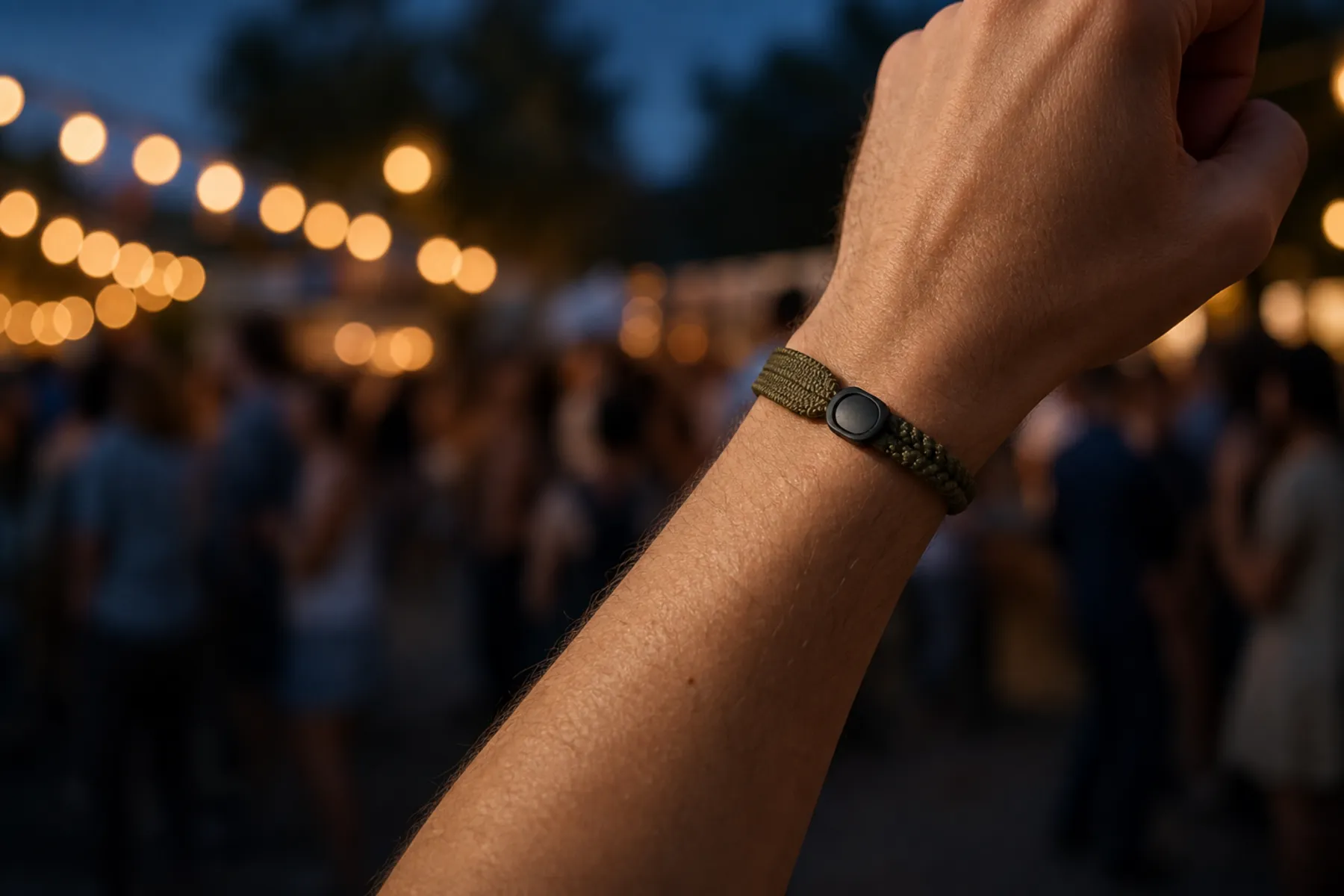
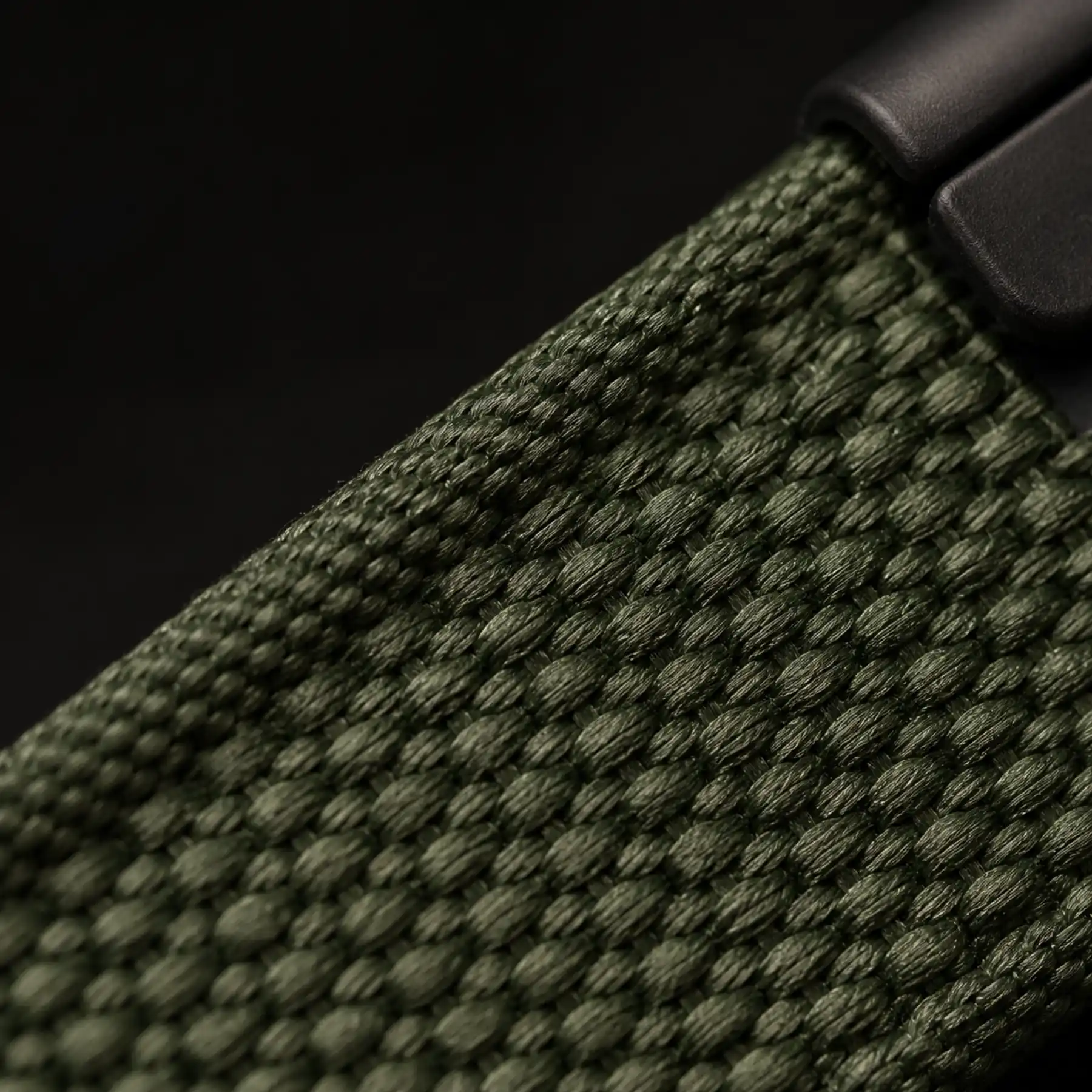
A jacquard weave builds the design out of coloured threads, so the artwork is the fabric. It cannot rub off, it does not soften in the wash of a five-day event, and it still looks intentional on the last day — which matters when the band is also functioning as merchandise that guests photograph.
The constraint is resolution. Woven detail is limited by thread count, so fine serif type, thin rules and subtle gradients do not survive the translation. Dye sublimation handles that detail but sits on the surface and dulls with wear. We choose between them by asking whether the band has to look good on day five or only on day one.
The one-way closure and what it is for
The closure is a plastic clip that engages once. That is the property doing the access work: a band cannot be passed to a friend at the gate without visibly destroying it, which is the specific risk at any event where admission has been paid for.
It also means the fit at issue is final. Staff should fit the band on the wearer rather than handing it over, and the property should carry an explicit allowance for misfits, because every wrong fit consumes a credential.
Multi-day wear, sleep and showers
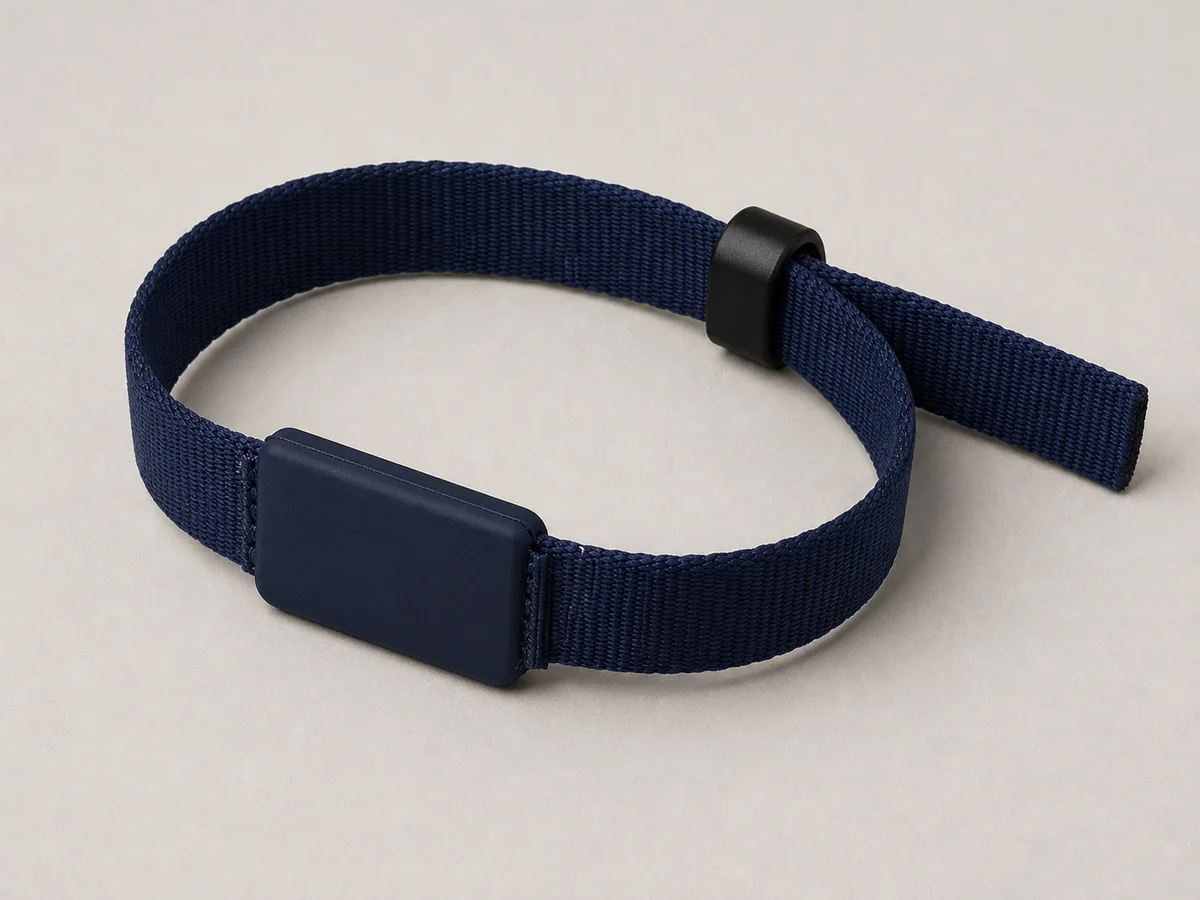
A band that cannot be removed is worn in the shower and slept in, which is exactly what a woven strap is good at and what a rigid one is not. The fabric dries reasonably quickly, does not press into skin overnight and does not catch on bedding the way a raised moulded face can.
Where it struggles is prolonged saturation. A band that spends hours in a pool every day holds water at the closure and against the module, and the fabric can begin to smell before it begins to fail. For water-led properties, the moulded models are the better answer.
Issue at volume
Events issue in bursts. A woven band with a one-way closure fits that because there is nothing to size, adjust or explain — staff fit it, it is done, and the guest cannot undo it later and ask for help.
What slows the line down is choosing between tiers at the desk. Where tiers exist, we usually specify a different woven colourway per tier rather than a printed tier marker, so staff pick a band rather than reading one.
Minimum order is 500 pieces per artwork, with 14–21 days production after artwork approval. A distinct woven colourway per tier is a distinct count, so the tier map is settled before the order rather than after.
What happens after the event
These are single-issue credentials. Removal cuts the strap, so nothing is recovered, and the property has chosen a waste stream in exchange for the transfer control. That is a fair trade for a paid event and a poor one for a hotel that could recover and reuse a moulded band.
Guests do keep them, which is worth remembering when specifying the artwork. A band with a date on it becomes a souvenir; a band with a generic property mark becomes stock that can be used again next season, which is usually the better commercial decision.
When this is the wrong model
It is wrong for a property whose guests are in and out of a pool all day, where a fabric strap stays wet and a moulded one does not.
It is wrong where bands are recovered and reissued, because the closure makes that impossible by design. And it is wrong for a short day-visit programme, where a paper or synthetic day credential does the same job at a fraction of the specification.